Introduction
The Sudan crisis has prompted an emergency response at Egypt’s southern border, while other refugees face the challenges of protracted displacement.
Over 457,000 refugees and asylum-seekers are currently registered in Egypt, a significant increase compared to 2023.
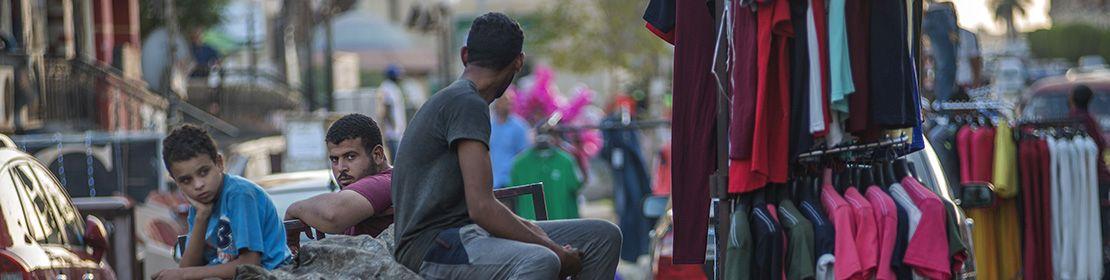
Many refugees live in poor neighbourhoods of Egypt’s large cities. The country is also facing a new influx of people fleeing Sudan, where fighting erupted in April 2023.
The 213,000 registered Sudanese represent 44% of the total refugee and asylum-seeker population, followed by over 154,000 Syrians (32%) and other nationalities (24%). According to the UN, the number of Sudanese refugees and asylum seekers is expected to increase.
What are the needs?
Refugees and asylum seekers in Egypt heavily rely on humanitarian assistance. They often reside in overcrowded neighbourhoods, where the host community struggles with substandard living conditions and high unemployment rates.
Egypt is the main recipient of people fleeing the ongoing conflict in Sudan.
The continued influx of refugees and migrants coincides with Egypt’s worst economic recession in decades. Dramatic price increases for food and utilities are worsening living conditions for the most vulnerable population.
Some 32.5% of Egyptians were already living below the national poverty line before the onset of the Sudan crisis. The skyrocketing inflation, which reached 38% in 2023, severely affected all population groups. According to UNHCR, this percentage is even higher among refugees (84%). Access to basic services, such as health care and education, is extremely challenging for refugees and asylum seekers.
Refugees from African countries also face linguistic barriers, harassment, and discrimination. These further limit their access to formal education and contribute to their marginalisation. They have no right to work in Egypt, leaving them dependent on high-risk jobs in the informal sector, without any labour protection.
The high number of new arrivals from Sudan has further contributed to the stigmatisation and discrimination suffered by refugees in general, especially those of sub-Saharan origin.

How are we helping?
In 2023, the EU allocated €5 million in humanitarian aid to help the most vulnerable refugees and asylum seekers in Egypt. EU humanitarian funding covers 2 main sectors: education in emergencies and basic needs.
The EU is responding to the influx of people fleeing the conflict in Sudan by funding life-saving assistance such as food, water, sanitation, and hygiene items for those newly arriving across the border to Egypt. In addition, we support emergency cash assistance, child friendly spaces, and psychosocial support for the children.
Around 38% of all refugees and asylum seekers in Egypt are children. There has been a sharp increase in the numbers of unaccompanied minors and separated children among recent arrivals.
The EU also funds activities to improve access to formal and non-formal education for refugee children, focusing on primary and secondary school levels in both public and refugee community schools. An EU-funded learning recovery programme has equipped refugee teachers with tools to identify learning gaps and better develop students’ foundational skills in the classroom.
UNICEF received €2.4 million to address the most urgent needs of new arrivals from Sudan: water, sanitation and hygiene, emergency cash assistance, and child protection.
The EU allocated €200,000 to support the Egyptian Red Crescents’ emergency response at the border entry points from Sudan.
The EU provides cash assistance to vulnerable refugees in Egypt to help cover their basic needs and ensures core protection services. UNHCR received €2.6 million to provide multipurpose cash assistance to almost 71,000 individuals.
Due to the catastrophic worsening of the humanitarian situation in Gaza, Egypt has become the main point of entry for delivery of humanitarian aid into the Gaza Strip. Since October 2023, the EU has launched 37 Humanitarian Air Bridge flights to Al-Arish carrying lifesaving assistance for Palestinians in need, which will be channelled via land through Rafah.
Last updated: 25/01/2024
Facts & figures
Over 378,504 new arrivals from Sudan since 15 April 2023.
The refugee and asylum-seekers population registered by UNHCR include :
- 213,000 Sudanese
- 153,000 Syrians
- 38,000 South Sudanese
- 32,000 Eritreans
- 17,000 Ethiopians
- 23,000 other nationalities
EU humanitarian funding:
€5.2 million in 2023
€38.1 million since 2015.