

What is it?
A peer review of disaster risk management and civil protection systems provides a country or a region with a unique opportunity to reflect on its readiness to cope with natural hazards and human-induced disasters and to identify ways of strengthening its prevention and preparedness policy and practices. It also facilitates the exchange of good practices.
The peer review programme is a tool made available to civil protection authorities of Member States, participating states, enlargement and neighbourhood countries under the EU Civil Protection Mechanism legislation. It is managed by the Commission's Civil Protection and Humanitarian Aid department.
How does it work?
The peer review programme is carried out in close partnership between the Commission, the team of peers (civil protection experts and practitioners selected for the specific review), and the relevant authorities of the country/region under review.
The Euro-Mediterranean Centre for Climate Change (CMCC), based in Italy, is currently supporting this programme until 2024.
The peers prepare a report, including an overview of the situation, and identified good practices and recommendations for improvement, based on desk research and in-country discussions.
The civil protection authorities of the country under review have an opportunity to review and comment on the report during its drafting. The review is completed when the final report including recommendations and good practices is released.
Depending on the administrative organisation and responsibilities at various levels across the Member States and participating states in the EU Civil Protection Mechanism, a peer review may be undertaken at national and/or regional level.
Wildfire Peer Reviews
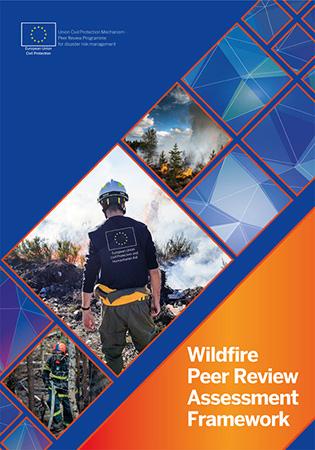
The Commission has launched a tool to support wildfire risk management capacity building and good practices exchange among European countries.
The Wildfire Peer Review Assessment Framework (Wildfire PRAF) will:
- facilitate peer reviews of wildfire risk management systems within the framework of the EU Civil Protection Mechanism
- help countries assess their capacity to prevent and prepare for wildfires.
Member States and participating states in the Mechanism are invited to volunteer for a wildfire management peer review or to use this tool for a self-review, at national and/or regional level.
Wildfires are one of the most prominent disaster risks in Europe and are increasing in intensity and geographic scope due to climate change. The year 2022 was the second worst in Europe in terms of hectares of burnt areas since 2006, behind 2017 only.
In September 2022, the EU ministers responsible for civil protection called on the Commission to step up its support to Member States for wildfire prevention. In response, we put forward a Wildfire Prevention Action Plan. The Wildfire PRAF is a key contribution to this action plan.
Guidance material
To guide the peer review process for both the country/region under review and the peer team, the following key documents are available:
The Peer Review Assessment Framework (PRAF) describes the disaster risk management thematic areas that are to be reviewed. The 7 thematic areas are: (i) disaster risk reduction governance, (ii) risk assessment, (iii) risk management planning, (iv) risk prevention, (v) risk preparedness, (vi) emergency response, and (vi) recovery and lessons learned.
The host country or region can choose all or a subset of the thematic areas to define the scope of their respective peer review.
The document also assists the structuring and drafting of the peer review report.

The Wildfire Peer Review Assessment Framework (Wildfire PRAF) is a tool designed to facilitate thematic reviews of wildfire risk management systems, within the framework of the EU Civil Protection Mechanism. It builds on the general Peer Review Assessment Framework (PRAF( It focuses on the risk associated with large-scale unplanned or uncontrolled wildfire fires affecting natural, cultural, industrial, and residential landscapes.
The framework also serves as a self-assessment tool for countries and regions to analyse their own systems for wildfire risk management.
This document provides the essentials for an effective peer review. It clarifies the principles that drive the process, the roles and responsibilities of the different actors involved, the workflow to be followed, and the tools available.
Peer-reviewed countries
To date, 16 countries have benefitted from a peer review: the United Kingdom, Finland, Bulgaria, Georgia, Türkiye, Estonia, Malta, Poland, Cyprus, North Macedonia, Tunisia, Serbia, Algeria, Portugal, Romania, and Republic of Moldova. Find links to all peer review reports in the list below.
Latest peer reviews
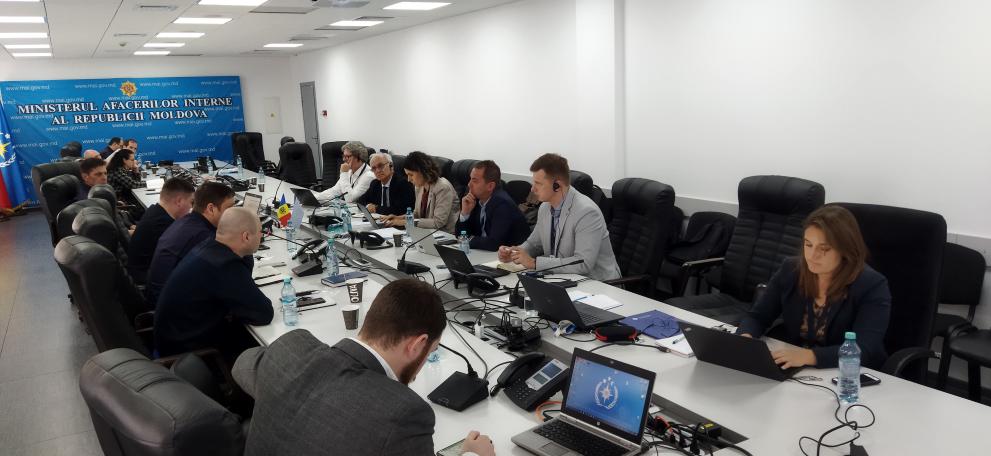
The Ministry of Internal Affairs of Moldova requested a peer review of its disaster risk management capabilities in October 2022.
The General Inspectorate for Emergency Situations of Moldova was the focal point for this peer review. The mission took place in April 2023 and the report was published in October 2023.
The report identified areas for improvements and highlighted good practices within the disaster risk management and civil protection system in Moldova.

The Department for Emergency Situation within the Ministry of Interior of Romania, together with the General Inspectorate for Emergency Situations requested a peer review in April 2022.
The focus was disaster risk reduction governance, risk management planning, risk prevention, and risk preparedness measures.
The review mission took place in October 2022 when the peer review team met with a wide range of stakeholders and went on field visits in and around Bucharest. The report was handed over to the Romanian Prime-Minister in February 2023, and will contribute to the finalisation for adoption of the national disaster risk reduction strategy of Romania.
Peer Review reports
| Country | Date | Review | Report |
|---|---|---|---|
| Republic of Moldova | 2023 | Comprehensive Disaster Risk Management | en |
| Romania | 2023 | Thematic peer review on disaster risk management governance and prevention | en |
| Portugal | 2019 | Comprehensive Disaster Risk Management | en |
| Serbia | 2019 | Comprehensive Disaster Risk Management | en |
| Algeria | 2019 | Comprehensive Disaster Risk Management | fr |
| Country | Date | Review | Report |
|---|---|---|---|
| Cyprus | 2018 | Risk assessment | en |
| North Macedonia | 2018 | Comprehensive Disaster Risk Management | en |
| Tunisia | 2018 | Comprehensive Disaster Risk Management | en - fr |
| Estonia | 2016 | Risk management capabilities | en |
| Malta | 2016 | Risk assessment | en |
| Poland | 2016 | Risk assessment | en - pl |
| Bulgaria | 2015 | General Disaster risk management | en - bg |
| Georgia | 2015 | Risk assessment and early warning | en - ge |
| Türkiye | 2015 | General Disaster risk management | en - tk |
| Finland | 2014 | Building resilience to disasters: assessing the implementation of the Hyogo Framework for Action | en |
| United Kingdom | 2013 | Building resilience to disasters: assessing the implementation of the Hyogo Framework for Action | en |