

What is civil protection?
Civil protection assistance consists of governmental aid delivered in preparation for or immediately after a disaster strikes in Europe and worldwide.
The aid provided takes various forms:
- supplies (medicines, shelter items, water purification units, etc.)
- specialised teams, such as firefighters or search and rescue teams
- experts assessing and coordinating support right on the ground
- repatriation of EU citizens
How does the EU provide civil protection assistance?
When an emergency hits, the EU Civil Protection Mechanism can be activated by national authorities to enable a coordinated assistance.
All EU Member States, as well as 10 participating states (Albania, Bosnia and Herzegovina, Iceland, Montenegro, North Macedonia, Moldova, Norway, Serbia, Türkiye, and Ukraine), are taking part in the Mechanism.
The EU also has a coordination hub to manage these requests for assistance. It is called the EU’s Emergency Response Coordination Centre (ERCC).
The ERCC monitors emergencies around the world 24/7, 365 days a year, and stands ready to pool assistance from the participating countries in the Mechanism whenever needed.
In addition, the EU co-finances the transport and operational costs of the assistance provided through the EU Civil Protection Mechanism.
Activations of the EU Civil Protection Mechanism
The EU Civil Protection Mechanism has been activated more than 700 times. Below is an overview of the total requests for assistance per year, by country, and by type.

Prevention and preparedness
The EU works with national civil protection authorities also to support, complement, and coordinate their efforts in prevention and risk management planning.
In this respect, the EU:
- is financing relevant prevention and preparedness projects
- deploys experts on request to assess the risks
- provides advice and support to local or national authorities
- organise yearly meetings with Member States to discuss the challenges of the forest fire season in Europe, and to see how it can best accompany countries in their prevention and response efforts
- draws lessons learned and elaborates good practices for prevention and preparedness activities.
In addition, the EU develops policies that focus on prevention and the reduction of disaster risks.
Strengthening Europe's readiness
The EU is stepping up its collective ability to prepare for increasingly complex and frequent disasters. The new EU Preparedness Union Strategy sets out a comprehensive approach to anticipate risks, boost resilience and ensure effective crisis response across Europe. It brings together governments, civil society and the private sector to prevent and react to emerging threats and crises.
Did you know?
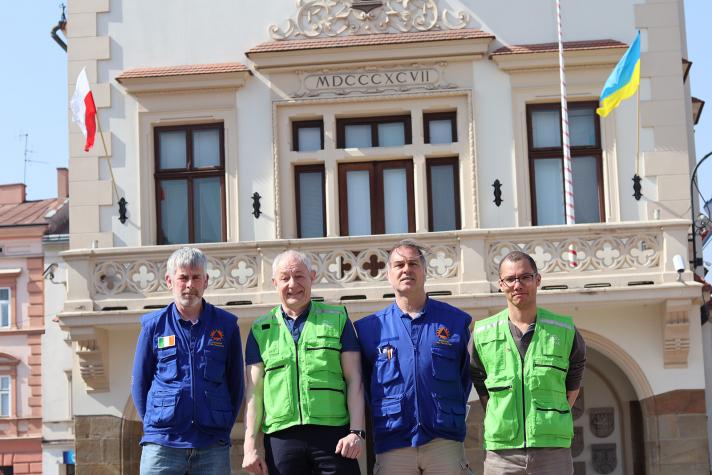
In response to Russia’s military aggression against Ukraine in February, the European Commission is running its largest-ever operation under the EU Civil Protection Mechanism.