What is it?
The Ebola virus disease is a severe and often fatal illness in humans. It is caused by a zoonotic virus that passes from animals to humans, spreading then further through human-to-human transmission.
The disease can have a devastating impact on the security, economies, and healthcare systems of the affected regions. When the main outbreaks occurred, the EU mobilised various resources to help Ebola patients and survivors, and to contain the disease.
Why is this important?
The world woke up to the potential global threat of Ebola when, between 2014 and 2016, the disease reached previously-unaffected countries in West Africa, leaving a huge death toll and paralysing economies.
To date, the Democratic Republic of the Congo (DRC) has registered 15 outbreaks, with the first one reported near the Ebola river in 1976.
During the past 16 years, however, the resurgence of outbreaks has accelerated, with 9 out of 14 reported during this period. The 13th outbreak started in North Kivu, DRC, in October 2021, and was declared over in December 2021.
The latest Ebola outbreak – the 15th in the DRC – ended on 27 September 2022, 42 days after the burial of the sole victim. Vaccination played an important part in the response: 51 direct contacts of the Ebola victim and 303 indirect contacts were vaccinated.
DRC areas affected by the 10th Ebola outbreak – the largest ever in the country and declared as a public health emergency of international concern – have also seen armed conflict for the past 2 decades. The epidemic came on top of a fragile humanitarian situation – around at least 1 million internally displaced people struggle to get food, clean water and health services.
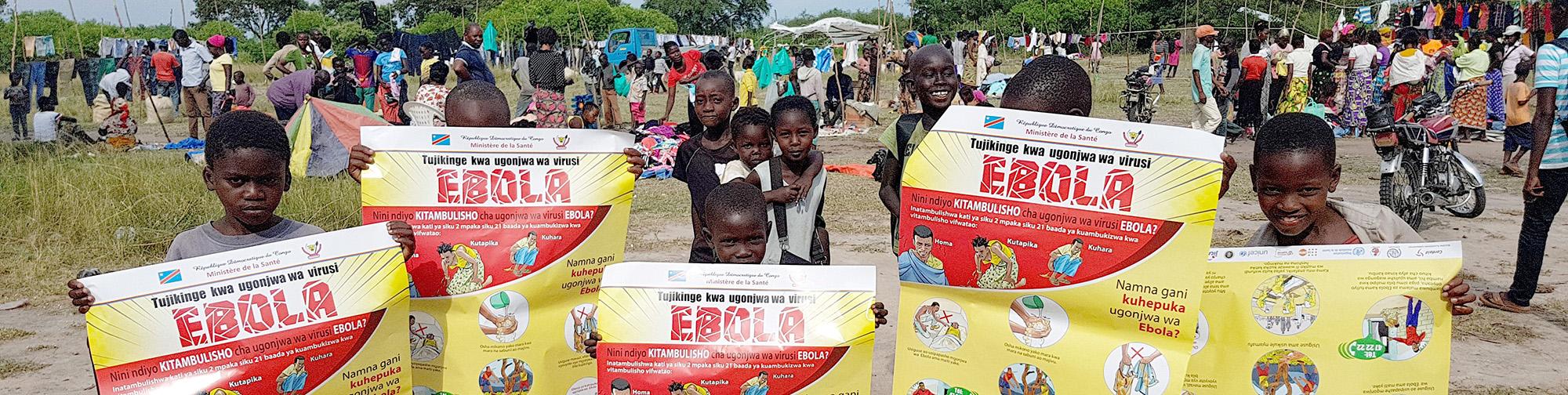
Medical facilities and health workers were attacked many times. Building trust by local communities is key to foster people’s readiness to comply with follow-up public health advice, treatment, vaccinations and safe burial practices.
Guinea declared another outbreak in February 2021, which was declared over in June 2021.
How are we helping?
Uganda
Following the declaration of an Ebola outbreak in Uganda in September 2022, the EU mobilised €3 million from its Epidemics Tool. This funding supported:
- the World Health Organization (WHO)
- UNICEF in responding to the outbreak at national level
- the International Rescue Committee (IRC) for preparedness and prevention activities in the most exposed refugee settlements.
In addition, the EU allocated €200,000 to the Uganda Red Cross. The funding supported its activities on coordination, surveillance with contact tracing, risk communication, community engagement, and safe and dignified burials.
For anticipatory actions, the EU allocated additional funding:
- €100,000 were allocated to the Kenya Red Cross to support its preparations in the at-risk locations in view of possible cases in Kenya
- €50,000 to South Sudan Red Cross
- €100,000 to the Red Cross in Tanzania
- €100,000 to Burundi.
The Ebola epidemic was declared over on 11 January 2023.
Between September 2022 and January 2023, over 140 cases were reported and over 50 deaths confirmed. The EU mobilised a total of €3.6 million in emergency humanitarian aid to help Uganda and its neighbours address the epidemic.
Experts from the European Centre for Disease Control were also deployed to Uganda during the epidemic.
Democratic Republic of the Congo (DRC)
DRC authorities lead the response with technical support by the United Nations (UN), including the World Health Organization (WHO), and other aid organisations. The EU contributed significantly to the international response to Ebola outbreaks in the DRC.
Experience has shown that responding to an Ebola outbreak requires an approach of inclusiveness, solidarity, and empathy towards the affected.
Guided by these principles, the EU has provided over €100 million for humanitarian and development action in the context of Ebola outbreaks since August 2018. This support helped with:
- infection and prevention measures
- work with local communities to promote understanding, acceptance and support of the response
- social protection and nutritional support to survivors and their families
- addressing the basic humanitarian needs of communities in Ebola-affected areas
- support for the national health sector to provide access to free and quality health care for those living in Ebola- affected areas.
In addition, the EU provided essential in-kind assistance on the ground through:
- EU humanitarian health experts and European Centre for Disease Prevention and Control (ECDC) epidemiologists to support the international response
- logistics support to aid workers on the ground through the EU’s humanitarian flight service (170 flights operated since May 2018)
- support to training on medical evacuation of humanitarian workers through the EU Civil Protection Mechanism.
In response to the 14th Ebola outbreak in the DRC on 23 April 2022, the EU remains in close contact with national authorities, the World Health Organization, and humanitarian partners. Together, we aim to assess the situation and address eventual needs on the ground.
On 6 May 2022, the European Commission provided €200,000 in humanitarian funding. The allocation will support the Congolese Red Cross society in addressing the outbreak by engaging with local communities and communicating the risks linked to Ebola. It will also help them provide psychosocial support, safe and dignified burials, screening, and support services such as logistics.
Since 2014, the EU has also made a significant contribution to Ebola research, including on vaccines development, Ebola treatments, and diagnostic tests, by providing over €230 million in funding.
Given the weak health system in the DRC, the EU has also been providing development funding, spanning over several years, to support the national health sector in the country (€222 million in total within 2014-2020).
Other countries
In line with WHO guidelines, over 2018 and 2019, the EU allocated more than €6 million in humanitarian and development funds. The aim was to help at-risk neighbouring countries (Uganda, South Sudan, Rwanda and Burundi) – strengthen their prevention and preparedness measures. Through its development programme, the EU is also supporting the national health systems of Burundi and South Sudan.
In Guinea, in an immediate response to the outbreak, the EU mobilised a total of €3.2 million in humanitarian and development funding. The funding covers patient care, prevention, monitoring and follow-up of contact cases, awareness raising and coordination support.
In parallel, the EU supported other complementary actions, including the activation of the EU Civil Protection Mechanism. Through the Mechanism, Belgium, France and Germany sent consignments of personal protective equipment, protective medical garments, laboratory material and PCR testing kits to support hospitals and frontline healthcare staff in epidemics control.
Last updated: 11/01/2023