Introduction
A complex crisis is affecting Mali, driven by conflict and insecurity, triggering (i) large-scale population displacements, (ii) socio-political instability, (iii) climate shocks and epidemics, and (iv) unprecedented levels of food and nutrition insecurity.
The country is increasingly recording serious human rights and international humanitarian law violations. Violent attacks by armed groups now affect civilians throughout most of the country.
As a result, an estimated 8.8 million people (42% of the total population ) require humanitarian assistance in 2023 – up from 7.5 million in 2022 and 5.9 million in 2021.
What are the needs?
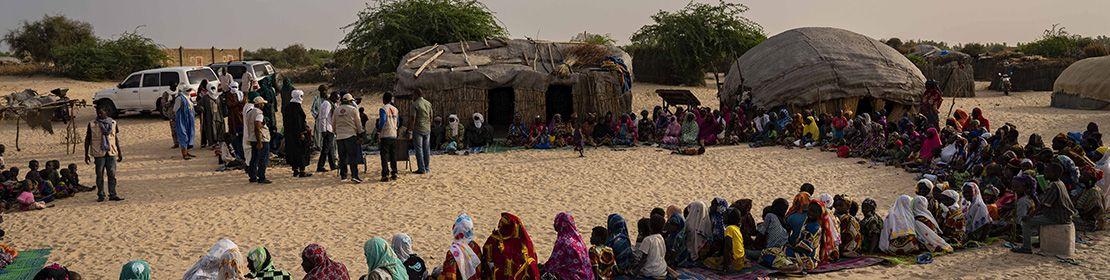
Since 2012, the conflict in Mali has affected millions of civilians. Violence has increased since 2018, causing severe violations of international humanitarian law. 2 coups d’état (August 2020 and May 2021), and tensions with the international community, have added to the instability.
About 1.5 million people fled their homes since 2012, some of them several times. Over 470,000 are displaced as of December 2022, including refugees from neighbouring countries, with few chances to return.
Since the start of the conflict, over 723,000 displaced people returned to their homes, and 85,000 came back from abroad. All of them remain highly vulnerable. In addition, close to 198,000 Malians are still refugees in neighbouring countries.
Over 3.9 million people require protection assistance in 2023, as serious human rights violations, including sexual violence, have increased.
The conflict, with erratic rain patterns, is the main cause of food insecurity. In 2023, 1.2 million people will require urgent food assistance during the lean season between harvests. Some 367,000 severely acutely malnourished children under 5 years old need urgent assistance, a 16% increase since 2022.
The violence specifically affects the education system: in October 2022, 1,726 schools were closed, leaving close to 520,000 children and 10,000 teachers out of school. Insecurity also affects humanitarians, 6 humanitarian workers were killed and over 140 attacks were recorded in 2022.
In the North and Centre, 1 out of 5 health centres is not functioning and the rest only partially due to insecurity and lack of staff.

How are we helping?
In 2023, the EU has allocated €26 million for humanitarian aid in the country.
The EU has provided more than €472 million in humanitarian aid in Mali since the beginning of the crisis in 2012. It is currently a leading donor of assistance in the country.
In 2021, EU humanitarian aid amounted to €36.5 million. In 2022, we increased our humanitarian funding to Mali to €47.3 million. This included an indicative amount of €6 million from the European Development Fund to alleviate the food crisis following Russia’s war of aggression against Ukraine.
EU humanitarian aid in Mali addresses the most urgent needs of displaced and vulnerable populations in conflict-affected and fragile areas. The EU considers the protection of civilians as a central focus of our needs-based and conflict-sensitive response.
Our assistance covers (i) food, (ii) basic essential items/ emergency shelter, (iii) health and nutrition – including access to primary and secondary health care –, (iv) protection assistance and psychosocial support, (v) education for children, and (vi) humanitarian coordination and access to remote locations for humanitarian workers.
To assist people displaced by conflict, EU-funded aid organisations operating through the Rapid Response Mechanism provide initial, multi-sectoral assistance. This assistance includes food and essential items, water, sanitation and shelter support.
Other EU-funded organisations provide protection but also health care and education services. Where and when possible, assistance is delivered through cash transfers and vouchers to enable people in need to buy what their households require the most.
Most health services in the north and parts of central Mali depend on humanitarian organisations. The EU funds around a third of the health facilities delivering essential care and medicines.
During the COVID-19 pandemic, EU-funded humanitarian projects in Mali have adapted their procedures to ensure the safety of beneficiaries and staff, while maintaining the delivery of vital assistance to vulnerable communities.
Every year, the EU contributes to treating severe acute malnutrition across the country. We fund the purchase and supply of therapeutic food and essential medicines for children suffering from this type of undernourishment.
The €86 million invested in nutritional care between 2011 and 2021 provided life-saving treatment to around 700,000 severely malnourished children.
To access hard-to-reach areas in Mali’s northern and central parts, the EU operates its humanitarian air service, transporting humanitarian workers and relief assistance for people in need. In complementarity with this service, the EU contributes to the UN’s Humanitarian Air Service (UNHAS).
EU humanitarian and development aid work together in Mali. We aim to ensure coordination between actions addressing immediate humanitarian needs and projects that tackle the root causes of crises. With EU aid, people in need build resilience to recurrent crises with time, making them less vulnerable in the future.
Last updated: 06/02/2023
Facts & figures
8th highest child mortality rate in the world (World Bank).
8.8 million people need humanitarian aid.
More than 1.24 million people requiring emergency food assistance between June-August 2023 (Cadre Harmonisé).
Close to 367,000 children under 5 years old affected by severe acute malnutrition.
More than 412,000 newly internally displaced Malians in 2022 (IOM/UNHCR, December 2022).
Close to 198,000 Malian refugees in Burkina Faso, Mauritania, and Niger (UNHCR).
More than 61,000 refugees in Mali.
EU humanitarian funding:
€26 million in 2023.
More than €472 million since 2012.