Introduction
Violent armed clashes broke out in Khartoum on 15 April 2023 between the Sudanese Armed Forces (SAF) and the Rapid Support Forces (RSF). These clashes quickly spread to the periphery with other actors getting involved, including in the states of Darfur, Gezira, and Kordofan.
The conflict is fluid and unpredictable. Warring parties are using heavy weapons in densely populated areas, with devastating consequences for civilians. In July 2023, the International Criminal Court opened an investigation into allegations of international crimes committed in Darfur.
The war comes following prolonged political gridlock after the 2021 military coup. Prior to the outbreak of violence, political, security, and economic instability, combined with a poor harvest, had already led to the worst humanitarian crisis in a decade.
The ongoing conflict is further exacerbating existing vulnerabilities and creating new ones. The EU has stepped up its humanitarian aid to support the most vulnerable.
What are the needs?
Around 25 million people (over half of Sudan’s inhabitants), of which 48% are children, urgently need humanitarian assistance in the country.
The conflict that started in April 2023 is causing immense suffering among civilians, with over 15,000 fatalities as of April 2024, although the data remain partial due to the extreme violence and limited communication and access. Violations of international human rights law and International Humanitarian Law by all parties to the conflict have been reported.
In 2023, Sudan became the second most dangerous place in the world for humanitarians, with at least 22 aid workers killed according to the Aid Worker Security Database. Medical staff and infrastructure are also increasingly being targeted, with 60 attacks verified by the World Health Organization since 15 April 2023.
The food insecurity and nutrition situation in Sudan has deteriorated significantly. The latest Integrated Food Security Phase Classification (IPC) projection, released in December 2023, estimated that 17.7 million people would face a high level of acute food insecurity between October 2023 and February 2024, in what is traditionally the best period of the year. Since then, several projections have indicated accrued deterioration, with millions projected to suffer famine-like conditions, while a significant portion of the population will face serious food shortages. Access and security threats, roadblocks, and a lack of connectivity prevented the update of the latest IPC analysis, but an IPC alert indicates that Darfur, Khartoum, Kordofan, and Gezira states, where the delivery of humanitarian assistance remains extremely challenging, could face catastrophic outcomes.
Throughout the country, 70% of health facilities in conflict-affected areas are considered out of service due to targeted attacks, occupation, looting of medicines and supplies, and an overall lack of medical staff and supplies. The disruption of basic public health services, coupled with a lack of access to water and sanitation systems, leads to disease outbreaks. These include malaria, measles, dengue and acute watery diarrhoea, diseases that had previously been under control. Since September 2023, a cholera outbreak has been ongoing in Sudan, with over 11,000 suspected cases reported in 11 states as of March 2024.
Shortages of food, clean water, medicines, cash, and fuel, along with limited communications and electricity, are being reported throughout the country.
A major protection crisis is ongoing, as the conflict has triggered urgent needs for protection, including mental health and psychosocial support, sexual and gender-based violence services, and child protection.
UNICEF estimates that about 19 million children in Sudan are out of school, as 10,400 schools (54% of the schools in Sudan) are closed.

The conflict is resulting in large waves of forced displacements, with over 8.6 million displaced people reported so far (29 March 2024). Out of these:
- over 6.6 million people, including at least 3 million children according to UNICEF, are internally displaced,
- over 2 million people have fled outside Sudan, the vast majority of whom are extremely vulnerable women and children.
Most of those displaced across Sudan or in neighbouring countries are in dire need of protection and basic humanitarian assistance, such as food, water, shelter, and health services, including mental health and psychosocial services.
Beyond the large-scale displacement across borders, the increase in armed actors and attacks along the border areas is a serious threat to regional security. Sudan’s neighbouring countries are also facing their own internal challenges.
The conflict is adding a new emergency to a humanitarian situation that was already deteriorating. Prior to the April 2023 conflict, the number of people requiring assistance had risen for 5 years in a row. There were already around 3.8 million internally displaced persons, including more than 418,000 newly displaced in 2022, fleeing violence and natural hazards. Sudan also hosted more than 1.1 million refugees – the second highest number in Africa – and almost all of them required humanitarian assistance.
The country’s political instability had led to a drastic reduction in the financial capacity to respond to the growing needs and ensure essential services. The donor base was reduced, and the gap between humanitarian needs and available resources was widening.

How are we helping?
In 2024, the EU has mobilised an initial amount of €72 million for the humanitarian response in Sudan.
At the International Humanitarian Conference for Sudan and neighbouring countries co-hosted by the European Union, France and Germany on 15 April 2024, Commissioner Lenarcic announced an additional €45 million for humanitarian assistance in Sudan.
In total, the European Commission committed €354 million in humanitarian and development funding for Sudan and its neighbours at this conference, which includes €117 million for Sudan and about €68 million for the neighbouring countries.
In 2023, the EU allocated over €128 million for the response to the humanitarian crisis in Sudan. The Commission’s total contribution to the response to the impact of the Sudan crisis in the neighbouring countries in 2023 was around €37 million.
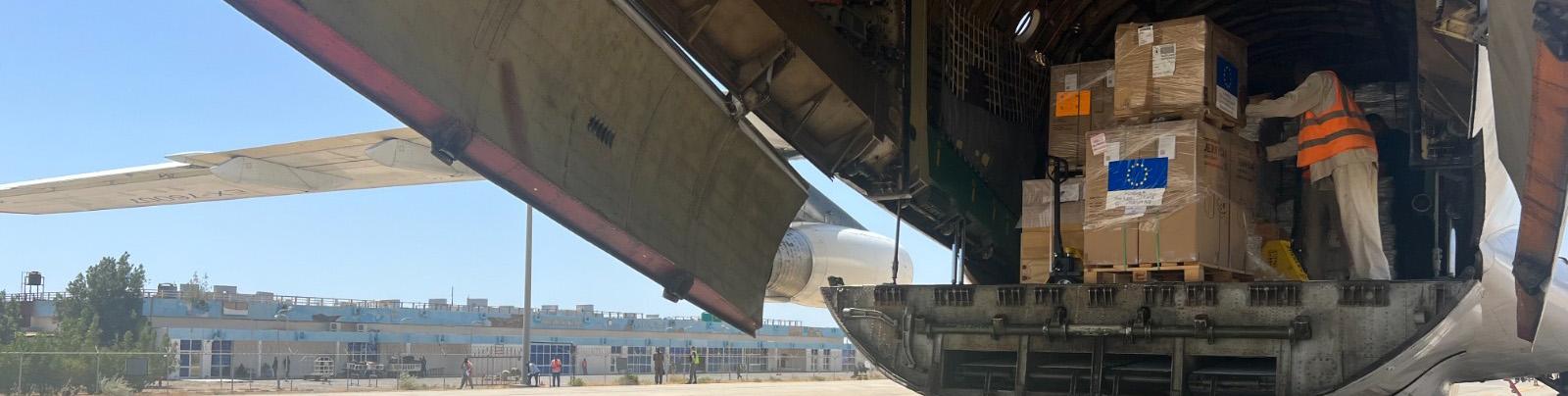
Within the framework of the European Humanitarian Response Capacity (EHRC), the EU has completed two Humanitarian Air Bridge operations to Chad and Sudan since the beginning of the crisis.
EU humanitarian aid provides communities with health and nutritional care, cash, food assistance, water and sanitation, shelter, protection, and education to the most vulnerable households – the internally displaced, refugee families, and host communities.
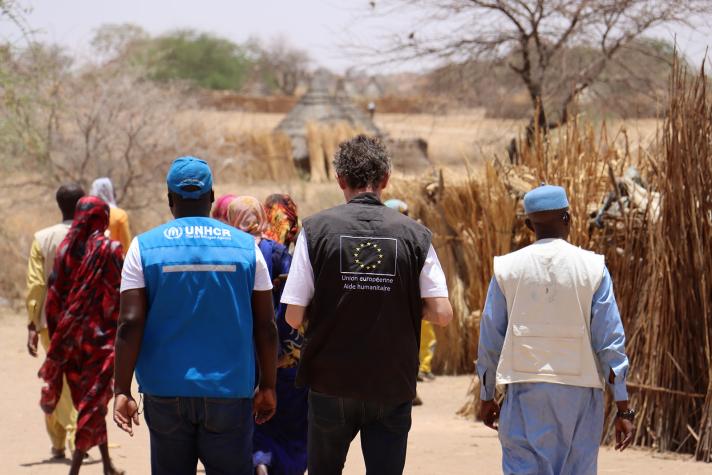
The EU also contributes to the nutritional treatment and care of children under 5 and pregnant or breastfeeding women across Sudan.
The EU continues to promote compliance with international humanitarian law for unhindered and safe access for humanitarian aid and the protection of civilians.
The safety and security of aid workers, premises, and assets in Sudan must be guaranteed so that they can provide emergency assistance to those affected, including via the following:
- waiving travel restrictions for humanitarian personnel and granting travel permits to move beyond Port Sudan,
- providing aid workers with immediate safe passage and guarantees for access and movement by road and air,
- fast-tracking visa applications to allow for the scaling up of humanitarian operations,
- easing customs restrictions to expedite imports of operational supplies,
- ensuring the safe movement of humanitarian staff and supplies without imposing armed escorts, which are putting their security, independence, and neutrality at risk.
Last updated: 15/04/2024
Facts & figures
24.8 million people in need of humanitarian assistance
17.7 million people projected to be in acute food insecurity (IPC phase 3 or above) between October 2023 and February 2024
More than 6.6 million newly internally displaced and 2 million in cross-border displacement, as of 29 March 2024. It is estimated that in total there are at least 9 million internally displaced persons in Sudan, the highest number globally. Over 950,000 refugees are still in the country
EU humanitarian funding in Sudan:
€117 million in 2024
Over €128 million in 2023
Almost €800 million since 2013