Introduction
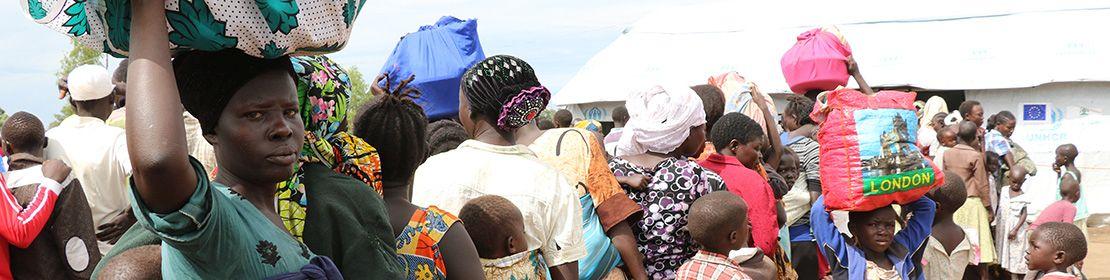
Uganda hosts the largest refugee population in Africa and the 6th largest in the world. Nearly 60% of the over 1.5 million refugees are from South Sudan and over 30% from the Democratic Republic of the Congo. Uganda is constantly receiving new arrivals, with over 260,000 refugees arriving since January 2022.
While Uganda is praised for its open-door policy, the large number of recent arrivals has put its progressive refugee policy under pressure. EU support is crucial to providing life-saving humanitarian assistance to refugees, as well as to host communities.
The country is also vulnerable to natural hazards and epidemics, and the EU is supporting Uganda’s efforts to better anticipate and respond to these events.
What are the needs?
Inflation, the recovery following COVID-19, and reduced humanitarian funding have resulted in a deteriorating situation for refugees and host families.

The number of people struggling to find food has risen by nearly 15% in the past year. The overall situation is likely to deteriorate further, due to diminishing international funding. Consequently, people might resort to desperate measures, such as early marriage, child labour, and transactional sex.
In 2023, 222,000 people were affected by floods, landslides, hailstorms and fires, and over 49,000 have been displaced.
In the northeast Karamoja region, 45% of the population of 582,000 face acute food insecurity, due primarily to climate shocks and hazards, including insufficient rain.

How are we helping?
Since 2017, the EU has supported humanitarian action in Uganda with more than €309 million.
For 2024, the EU has allocated €27.5 million for humanitarian aid there. Last year, in addition to the initial allocation of €30.5 million, the EU mobilised almost €5 million more to (i) accelerate local action in humanitarian and health crises and (ii) address food insecurity.
EU humanitarian funds help address the needs of over 1.5 million refugees, asylum seekers, and host communities as well as the needs of people exposed to natural hazards. It focuses on:
- providing rapid and effective emergency assistance to recently arrived refugees,
- improving access to basic services in refugee settlements,
- anticipating and responding to disasters.
EU funding makes a major contribution to the provision of (i) protection and multi-purpose cash transfers, (ii) access to improved primary healthcare and nutrition, (iii) safe water and sanitation, (iv) education to refugees and their host communities, and (v) disaster preparedness and response.

Many refugee and host community children are out of school. EU humanitarian aid contributes to ensuring safe and inclusive access to quality formal and non-formal primary and secondary education for refugee children, as well as for the especially vulnerable children of host communities.
Depending on their needs, children and adolescents receive tailor-made assistance based on age, gender, and abilities. For 2024, the EU has allocated €6.7 million for education.
During the 2022 Ebola outbreak, the EU supported Uganda’s preparedness and response by awareness-raising and hygiene promotion, alongside continued improvement of access to primary health care and nutrition services for refugees and their host communities.
The EU also contributes to strengthening the capacities of local first responders and setting up early warning systems. This means establishing timely, effective, and locally driven anticipatory action and first emergency response in case of a disaster.
In November 2023, the EU mobilised €100,000 to support communities to be prepared and able to respond to forecasted floods.
Beyond the provision of humanitarian aid, the EU helps increase the resilience and autonomy of the most vulnerable people, reducing their dependency on aid in the long term. This is particularly relevant in Uganda, where refugees can move freely, work, and start businesses.
EU development aid in Uganda complements humanitarian aid in areas with a high refugee population. It addresses the longer-term needs of refugees and their host communities, such as vocational training for young people and strengthening local livelihoods.
Last updated: 27/02/2024
Facts & figures
Hosts the largest refugee population in Africa
More than 1.5 million refugees, including more than:
- 926,000 from South Sudan
- 508,000 from the Democratic Republic of the Congo (DRC)
- 52,000 from Somalia
- 44,000 from Eritrea
- 42,000 from Burundi
- 24,000 from Rwanda
- 16,000 from Sudan
- 10,000 from Ethiopia
- 1,300 from other countries
(UNHCR, 31 January 2024)
EU humanitarian funding:
€27.5 million in 2024
More than €309 million since 2017