Introduction
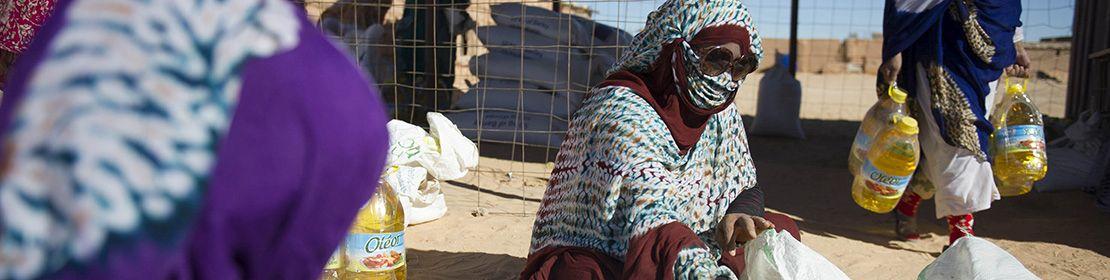
The political conflict in Western Sahara, unresolved for over 4 decades, has left thousands of Sahrawi refugees stranded. They live in 5 isolated camps near Tindouf in south-west Algeria with difficult access to resources, which makes humanitarian aid essential to their survival.
The EU is a long-standing humanitarian donor for the refugee population in Algeria, in line with the humanitarian principles of neutrality and impartiality.
What are the needs?
In the remote region where the refugee camps are located, access to basic resources such as food, water, healthcare and housing is limited. Due to the harsh desert climate and scarce natural resources, living conditions are particularly difficult.
Russia’s war on Ukraine and the COVID-19 pandemic have driven up food prices, making humanitarian aid in the refugee camps more expensive. These and other factors jeopardised the stability of food assistance, with significant cuts in food rations provided by the World Food Programme (WFP) in 2022.
According to WFP, malnutrition is increasing among Sahrawi refugee children. Global acute malnutrition affects almost 11% of children under 5 years old, a worrying increase from the registered 7.6% in 2019. Half of the children and women also suffer from anaemia.
The isolated location of the camps limits the employment and livelihood opportunities. When it comes to remote areas, logistics play a key role to ensure regular distributions of relief items to the population.
Social cohesion and peace are fragile in the camps. Many young people are becoming increasingly frustrated by the lack of opportunities resulting from the political deadlock.
The Sahrawi refugee camps are also vulnerable to natural hazards such as flash floods and sandstorms.

How are we helping?
Nearly 80% of the Sahrawi refugees rely on humanitarian assistance for their minimum daily food intake.
The EU is one of the leading donors to this crisis. In 2023, the EU committed €9 million in humanitarian funding to tackle the most pressing needs, such as the malnutrition among Sahrawi refugee children and women.
The EU addresses main needs in the camps through food assistance and nutrition care, provision of clean water, sanitation, health care and education.
EU humanitarian partners have devised a multi-year strategy to improve and extend the water network. Its implementation is gradually reducing the dependency on water trucking, which was costly and unsustainable. Now, around 70% of the water is delivered through the network.
The EU humanitarian aid also provides essential medicines that cover 70% of the health needs of the population in the camps.
The EU is working to improve education for children in the camps. We have invested in the infrastructure and sanitary facilities in schools. Our priority now is to scale up the quality of education by investing in better qualifications for teachers.
Last updated: 25/01/2024