
Introduction
Since the end of the conflict against the Islamic State in 2018, the humanitarian crisis in Iraq has evolved from an acute crisis to a protracted one. This conflict displaced 6 million people between 2014 and 2017.
There has been a shift towards the return and reintegration of displaced people. Although almost 5 million people have returned to their areas of origin, some 1.1 million are still Internally Displaced Persons (IDPs) and 300,000 mostly Syrian refugees remain uprooted. Access to civil documentation and basic services such as education is a challenge for those still displaced.
The EU provides humanitarian assistance with a strong focus on access to civil documentation and child education to the most vulnerable Iraqis.
What are the needs?
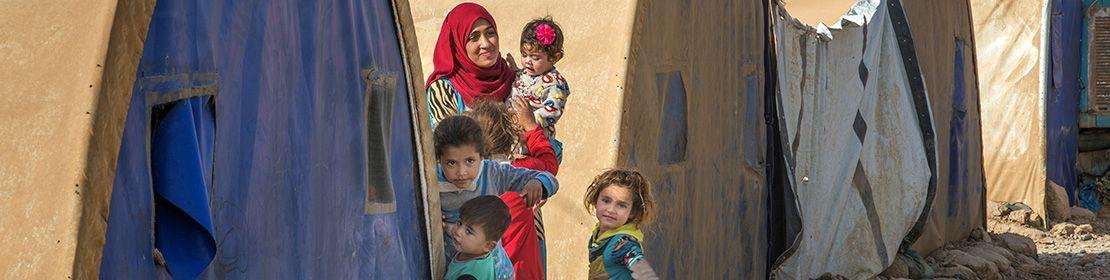
To date, almost 155,000 people continue to reside in 23 camps for internally displaced persons in the Kurdistan Region of Iraq (KRI).
Additionally, around 950,000 people are living in urban areas (including informal settlements) dispersed around the country. Similarly, over 270,000 Syrian refugees are living in 10 refugee camps and urban areas (including informal settlements) of KRI.
Iraqis that remain displaced struggle to earn a regular income. The lack of civil documentation is a major protection issue that hampers their access to services and hinders their movements, including a potential return to their areas of origin.
In this post-conflict environment, Iraq is working with the international community to find durable solutions for displaced populations. While the focus has been on return, local integration should also be considered as a viable option.
Access to civil documentation and education are the most pressing humanitarian needs in Iraq today.

How are we helping?
The EU is a longstanding donor in Iraq, providing humanitarian aid and protection through its partners.
In 2024, the EU allocated €20 million for humanitarian programmes in Iraq and over €3.04 million to disaster preparedness. This funding primarily focuses on supporting the most vulnerable internally displaced people. We put a particular emphasis on education and protection, including access to civil documentation.
In 2024, the EU’s humanitarian strategy focus on protection services-within the Iraqi legal system- and child education for people under protracted displacement situations as well as addressing disaster preparedness among vulnerable communities affected by climate change.
The EU aims to assist displaced people in obtaining a basic set of civil documents needed to move freely around the country and access key social and legal services. EU-funded multipurpose cash assistance additionally facilitates the transition of IDPs into the government’s social protection systems.
National civil documentation is essential for the freedom of movement and access to assistance, health care, and education. The international community encourages the authorities to implement a more systematic approach to providing official documents to all Iraqi citizens.
Since 2014, the EU has provided over €570.8 million in humanitarian aid to displaced Iraqis and Syrian refugees inside Iraq.
Last updated: 27/05/2024
Facts & figures
2.5 million people in need of humanitarian assistance
Over 1.1 million displaced people
5 million returnees
300,000 refugees, including 270 000 Syrians
EU humanitarian funding:
€23 million in 2024
€570.8 million since 2014