
Introduction
The EU has been providing humanitarian assistance to Palestinians in need since 2000, supporting people affected by emergencies and shocks.
The protracted humanitarian situation of Palestinians in the Gaza Strip continues to deteriorate rapidly due to the continued intensification of hostilities after the terrorist attack by Hamas of 7 October 2023, on Israeli soil, which left more than 1,200 Israelis dead. The EU has strongly condemned the terrorist attack by Hamas.
The consequent full-scale Israeli military operations, along with the blockade of Gaza, has brought the already dire humanitarian situation there to a catastrophic level for the 2.1 million population resulting in sustained and significant loss of life combined with persistent displacement among civilians.
The situation across the West Bank, including in East Jerusalem, has also deteriorated significantly as, since 7 October 2023, the Israeli authorities have imposed additional restrictions on the movement of 3.3 million Palestinians, which are impacting every aspect of their lives. Military incursions, settler violence, and land seizures have also intensified, deeply affecting both urban and rural areas.
As a long-standing humanitarian donor, the EU is responding to the population’s most pressing needs. This is done in line with the humanitarian principles of humanity, neutrality, impartiality, and independence.
What are the needs?
According to the Ministry of Health in Gaza, since 7 October 2023, at least 41,534 Palestinians have been killed and more than 96,092 have been injured. Over 11,355 recorded fatalities are children.
1/4 of those injured are estimated to have sustained life-changing damage, mostly to their limbs and require medium to long-term rehabilitation. More than 2 million Palestinians are without protection, food, water, sanitation, shelter, health care, education, electricity, and fuel – the basic necessities to survive.
Over 1.9 million people (over 90% of the population) have been internally displaced multiple times amidst intensified Israeli airstrikes, ground confrontations, and recurrent evacuation orders.
The ongoing issuance of mass evacuation orders, without ensuring that those displaced have safe and adequate shelter, is worsening the humanitarian crisis for hundreds of thousands of people and is leaving 86% of the Gaza Strip inaccessible to Palestinians.
Due to intense military operations, civilian infrastructures have been severely damaged and access to essential services severely restricted. Persons with disabilities face additional barriers due to lack of structured support and assistive devices, while women and girls’ dignity, safety, health and rights have been severely compromised.
Half a million people are at risk of catastrophic hunger, starvation, and acute food insecurity. The risk of famine is escalating due to intense conflict, restricted humanitarian access and inadequate aid.
Malnutrition is widespread across all areas of Gaza, posing serious risks to the lives, nutritional wellbeing, and development of children. There has been a significant increase in malnutrition among children, pregnant women, and breastfeeding mothers in Gaza.
The education system has completely collapsed, leaving all children out of school while educational facilities are serving as shelters for displaced people.
Healthcare has been decimated, with more than 500 attacks on healthcare recorded since 7 October 2023, and only 17 out of 36 hospitals across Gaza that remain operational and partially functioning.
Most water facilities have been destroyed or left unable to operate and solid waste is accumulating, with landfills not being accessible. Amidst deteriorating sanitary conditions, Polio was detected in Gaza in July 2024 and since then, despite operational challenges, a vaccination campaign was launched and successfully vaccinated 560,000 children in September 2024.
The security situation for civilians and aid workers continues to rapidly deteriorate, with humanitarian aid missions facing serious impediments within a complex operating environment.
Urgent needs include:
- protection of civilians in line with international humanitarian law, including rapid, unhindered, and safe access of humanitarian aid
- fuel to run generators of hospitals and desalinate water
- health and nutrition services
- food and cash assistance
- water, sanitation, and hygiene
- shelter and non-food items
- education in emergencies

The humanitarian situation in the West Bank continues to significantly worsen following the outbreak of the war in Gaza. This is due to:
- rapid settlement expansion and legalisation heightening the risk of de facto annexation.
- Israeli military operations and increased airstrikes
- intensified search and arrest operations resulting in the detention of at least 9,510 Palestinians held in deplorable conditions
- persistent Israeli settler attacks on Palestinian communities with at least 1,390 settler attacks in the West Bank and 1,628 people displaced in the context of these attacks since 7 October 2023.
- Since 7 October 2023, confrontations between Israeli forces, settlers, and Palestinians have resulted in the killing of more than 693 Palestinians.
Movement impediments are permanently or intermittently controlling, restricting, and monitoring Palestinian movement in the West Bank. These restrictions prevent direct access to Palestinian towns, villages, and major roads, and impede Palestinian communities’ access to basic services including health, education, and livelihoods between in Area C and beyond.
Since 7 October 2023, 4,594 individuals (including 1,875 children) have been forcibly displaced. This is more than twice the number of people displaced in the same period (October – September), before 7 October 2023.
Close to 1,600 individuals were displaced during military operations resulting in extensive damage to civilian and public infrastructure, particularly in Area A and B, including refugee camps with 2,400 housing units damaged, 106 of which are now uninhabitable.
Another 1,488 individuals have been displaced due to home demolitions by Israeli Authorities in Area C and East Jerusalem and 1,627 individuals have been displaced due to settler violence.
As in any other conflict, international humanitarian law must be respected in full to protect civilians and grant unhindered and safe access for humanitarian aid.

How are we helping?
In 2023, the European Commission has quadrupled its humanitarian assistance to Palestine, allocating €103 million in humanitarian aid to vulnerable Palestinians in Gaza and the West Bank.
In 2024, the Commission allocated over €193 million in humanitarian aid to vulnerable Palestinians. On 28 September, the President of the European Commission Ursula von der Leyen announced an additional top-up of €45 million in support to Palestinians, subject to the approval of the Budget Authority. This would bring the total of the assistance to €238 million for 2024.
This funding supports humanitarian organisations working in both Gaza and the West Bank. Despite the considerable insecurity and logistical challenges, EU humanitarian partners continue to respond on the ground, doing their utmost to provide relief in Gaza and the West Bank, often at great personal risk.
Access challenges and security concerns in Gaza have forced humanitarian partners operating on the ground to reduce their operations to a bare minimum. Their capacity to deliver is indisputable, but they require access.
The EU continues to deliver humanitarian aid for Palestinians by air and by sea.
Air bridge operations
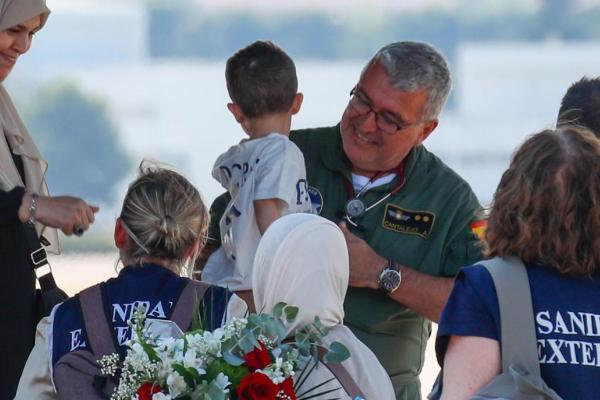
The EU also launched a Humanitarian Air Bridge (HAB) operation in aid to the people affected by the crisis.
As of 19 September 2024, a total of 60 flights transported over 3,400 tonnes of cargo supplied by humanitarian partners, EU-owned stockpile items, and donations from Member States.
In this regard, so far, supplies from Belgium, France, Germany, Greece, Ireland, Luxembourg, Portugal, Romania, Slovakia, Malta, Italy and Spain have already been transported via Humanitarian Air Bridge flights. Coordination with Member States and partners continues for the further shipment of other life-saving goods.
The aid transported includes medical supplies, shelter, WASH, educational supplies, and medicines among others.
Furthermore, the EU Civil Protection Mechanism has been activated to offer support for repatriation flights from Israel and to support operations for the maritime corridor from Cyprus to Gaza.
Before 7 October 2023
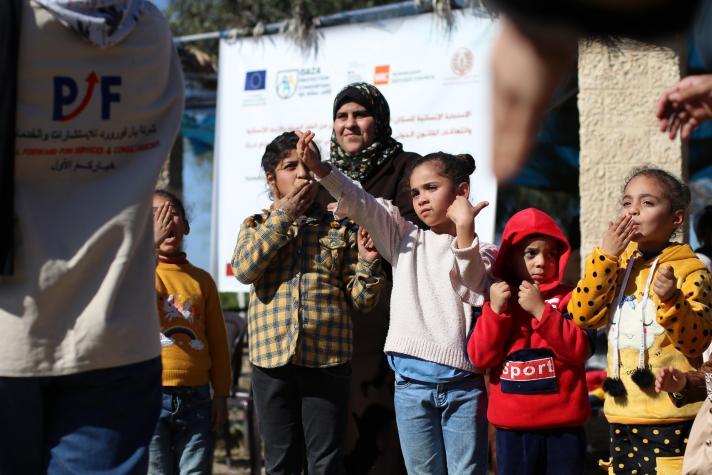
In the Gaza Strip, the EU has been providing vulnerable families affected by sudden emergencies and shocks with cash assistance, helping them meet their basic needs.
The EU’s assistance has included protection, safe education for children, and health care.
With the support of EU humanitarian aid, the Norwegian Refugee Council (NRC) provided targeted assistance to people in Jabalia, in northern Gaza.
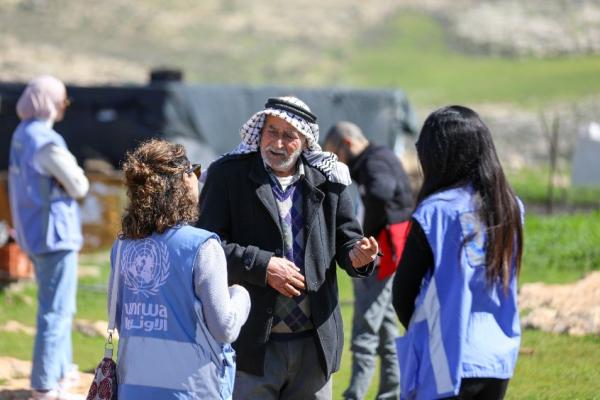
In the West Bank, specifically in Area C, East Jerusalem, and Hebron H2, the EU and several Member States are supporting a consortium of humanitarian partners. They protect communities at risk of forcible displacement because of demolitions, evictions, and settler violence.
EU humanitarian partners provide emergency assistance, legal aid, and access to essential services. The EU also helps improve the living conditions of communities that are barred from accessing or upgrading basic services. For example, by providing shelter and safe sources of water.
The EU advocates for compliance with international humanitarian law and the need to uphold human dignity. It condemns the illegal destruction of Palestinian homes, assets and aid infrastructure, and the forcible displacement of populations.
In both the West Bank and the Gaza Strip, EU humanitarian funding has helped Palestinian children access schools in safe and conducive environments, despite the many obstacles.

The EU also helps strengthen health services to allow essential primary health care and emergency medical services to continue. In addition, it improves access to water, sanitation, and hygiene for vulnerable communities.
The EU supports numerous humanitarian partners in the occupied Palestinian territories: United Nations agencies, the Red Cross and Red Crescent, and international non-governmental organisations.
Since 2000, the EU has provided more than €1.1 billion in humanitarian assistance to help meet the basic needs of the Palestinian population.
* The designation of Palestine shall not be construed as recognition of a State of Palestine and is without prejudice to the individual positions of the Member States on this issue.
Last updated: 30/09/2024
Facts & figures
3.3 million people need humanitarian assistance in the Occupied Palestinian Territory (2.3 million in Gaza and 1 million in the West Bank) (UN/OCHA Flash Appeal – April 2024)
Over 625,000 students have no access to education since October 2023 (UNOCHA Flash Appeal April 2024)
Over 1.9 million estimated internally displaced people (Gaza) (UN OCHA)
EU humanitarian funding:
€238 million for 2024
€103 million in 2023
More than €1.1 billion since 2000