

Introduction
With the overthrow of the Assad regime in late 2024, Syria is seeing drastic changes. Humanitarian needs in Syria remain at an all-time high, with 7 out of 10 Syrians requiring humanitarian assistance (16.5 million people). More than 14 years after the start of the crisis, half the population remains displaced, both inside and outside the country. Syrians have been confronted with the impact of conflict, displacement, climate change, epidemics, continued hostilities and insecurity in parts of the country, derelict essential infrastructure, as well as a devastating earthquake in February 2023.
The recent conflict escalation and the collapse of the government in Damascus have heightened the risks associated with meeting the population’s basic needs. As a leading donor, the EU and its Member States have provided sustained humanitarian funding since the start of the conflict.
What are the needs?
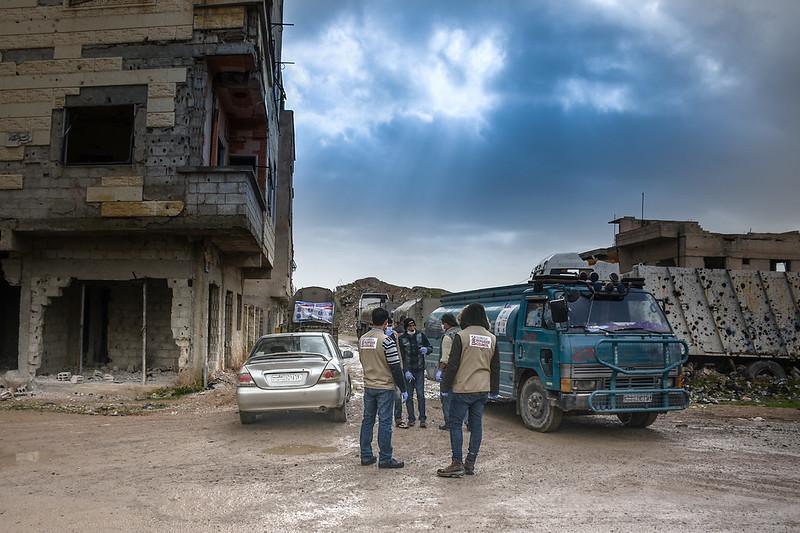
The war in Syria remains among the world’s deadliest conflicts of the past 30 years, with over a decade of fighting causing severe humanitarian suffering. Mass displacement, widespread food insecurity, crumbling infrastructure, economic decline, and preventable diseases have left 16.5 million people in urgent need of assistance in 2025.
Syria ranks as the 4th most food-insecure country globally, with 14.5 million people requiring food assistance. In recent years, intensified hostilities and violations of International Humanitarian Law in Northern Syria have contributed to large-scale displacement, worsened living conditions, and destroyed essential services and infrastructure.
The November 2024 escalation triggered mass displacement due to major territorial shifts. The hostilities put civilians and humanitarian workers at risk disrupted public services, and damaged or destroyed critical civilian infrastructure.
In parallel, hostilities continue to be reported in different areas of the country, further exacerbating needs and impacting the ability of humanitarian organisations to access vulnerable populations. In particular, in North-East Syria, clashes around the Tishreen dam have resulted in over 413,000 people being deprived of water and electricity since 10 December 2024.
According to the 2025 Humanitarian Response Priorities (HRP):
- 16.5 million people are in need of humanitarian assistance
- In addition, more than 7 million IDPs continue to be displaced throughout the country, many for years on end and multiple times
- More than half the population lacks stable access to water
- Over 14.5 million people are food insecure
- More than 2 million internally displaced people live in camps and informal settlements, 85% of which are reportedly unable to meet basic needs
- 2.45 million children are out of school
- 16.3 million people are in need of protection services
- Approximately 656,000 people remain newly displaced following the escalation of late 2024
- An estimated 715,700 people returned to Syria from neighbouring countries from the beginning of 2024 until 13 March 2025
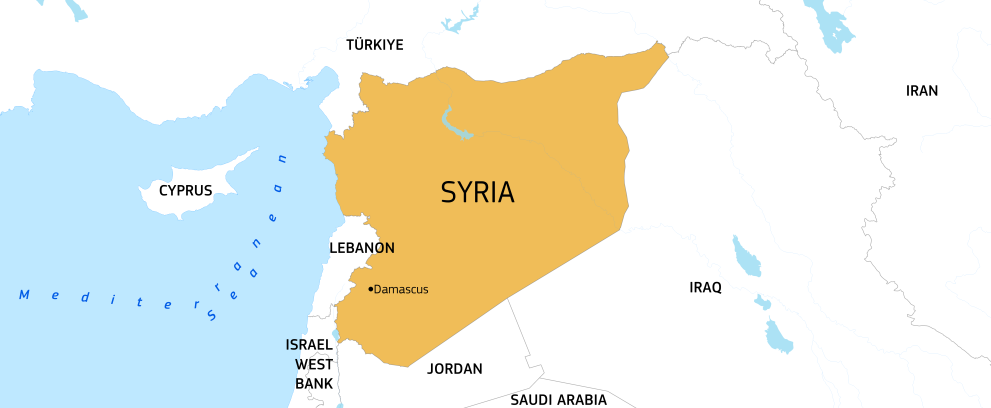
- Additionally, over 4.6 million registered Syrian refugees live in the region, mostly in Türkiye, Lebanon, and Jordan
- As of 17 March 2025, following the recent violence in Syria’s coastal areas, over 15,000 Syrians have fled to Lebanon.
How are we helping?
Despite many challenges, the EU has continued to provide impartial humanitarian aid to those in need across Syria since 2011. Along with its Member States, the EU is the largest donor to the Syria crisis, having mobilised more than €37 billion in humanitarian, development, economic and stabilisation assistance since 2011 to support Syrians inside Syria and across the region.
This includes more than €4.4 billion in humanitarian aid to Syrians and vulnerable host communities inside Syria and the region, including over €1.7 billion for Syria alone. Since 2017, the EU also organised a yearly Brussels Conference on “Supporting the future of Syria and the region” to provide space for Syrian voices, keep Syria high on the political agenda, and encourage financial pledges to the response.
The 9th Brussels Conference, organised on 17 March 2025, saw a total pledge of €5.8 billion in grants and loans. The EU pledged €270 million for humanitarian aid in Syria, Lebanon, Jordan and Iraq.
Latest EU humanitarian assistance
In 2024, the European Commission budget amounted to over €163 million in humanitarian aid to assist millions of people inside Syria. For 2025, the European Commission allocated an initial budget of €142.5 million in humanitarian aid to support the response in Syria. At the 9th Brussels Conference, an additional amount of €40 million was announced, thus bringing the total allocation for Syria in 2025 to €182.5 million.
The EU regularly allocates humanitarian funding to respond to new emergencies, including following the recent developments of December 2024 and the influx of displaced people from Lebanon in 2024, as well as to address increasing health needs and rising food insecurity across the country. In December 2024, close to €4 million in humanitarian aid was rapidly mobilised to respond to the conflict escalation and displacement within the country. The assistance supported the supply lines of essential medication and the distribution of food parcels, preventing interruption of services in conflict-affected areas.
In addition, the EU activated ReliefEU Capacities, bringing a total of 46 tonnes comprising medical, education, wash and shelter items from EU stockpiles in Copenhagen to Mersin, Türkiye, via truck, subsequently transported to Syria for distribution through humanitarian partners. A further 44 tonnes of medical items from Dubai were shipped to Istanbul through a Humanitarian Aid Bridge flight and distributed in Syria by humanitarian partner.
The last ReliefEU Capacities transport to support the humanitarian response in Syria was conducted in beginning of February 2025, delivering 11 tonnes of medical items and medicines to Syria.
In response to the February 2023 earthquakes, the EU humanitarian partners on the ground:
- conducted search and rescue operations
- provided tents, blankets, hygiene, cooking and other essential household items to the affected people
- supplied health facilities with medicines
The EU also sent supplies through its European Humanitarian Response Capacity warehouses in Brindisi, Copenhagen and Dubai, with the aim to support the efforts throughout Syria in response to the February 2023 earthquakes. .
In addition to humanitarian assistance, in 2023 the EU Civil Protection Mechanism was activated 2 days after the 6 February earthquake. Relief from 16 European countries was trucked in via Lebanon and Türkiye to government and non-government-controlled areas.

Overall support
EU humanitarian aid in Syria focuses on addressing critical life-saving and protection needs, as well as humanitarian early recovery by improving access to basic services for a deprived population. The assistance is channelled through EU humanitarian partners that provide the most vulnerable with health, water, sanitation and hygiene, protection, shelter and education services, nutrition, and food assistance.
The EU cooperates closely with all its humanitarian partners across the country: NGOs, UN agencies, and the International Red Cross and Red Crescent movement. They adhere to the humanitarian principles of humanity, neutrality, impartiality and independence.
The EU calls for the respect of International Humanitarian Law, urging parties to the conflict to protect civilians and civilian infrastructures and to allow unimpeded, safe and continued humanitarian access to people in need.
The EU also funds humanitarian aid in countries across the region – Türkiye, Lebanon, Jordan, Iraq and Egypt – which host millions of Syrian refugees.
Last updated: 21/03/2025
Facts & figures
16.5 million people in need in 2025.
More than 7.4 million internally displaced people.
Over 4.6 million registered Syrian refugees in the region, including:
- Over 2.8 million in Türkiye
- Over 755,000 in Lebanon
- Over 564,000 in Jordan
(Source: UNHCR – March 2025)
EU humanitarian funding inside Syria:
€182.5 million in 2025
Total assistance by the EU and its Member States to the Syria crisis:
More than €37 billion since 2011