What is it?
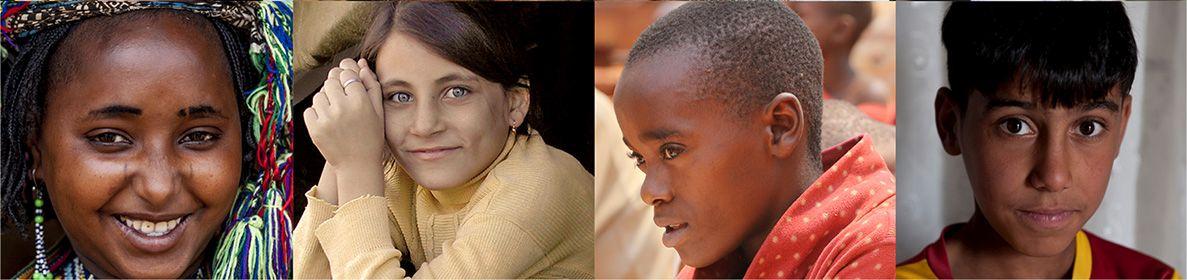
Natural hazards and human-induced crises are not gender neutral: they have a different impact on women, girls, boys, and men. They are also not age neutral.
To respond effectively to different needs, EU humanitarian assistance must take gender and age into account.
Why is this important?
Integrating gender and age enhances the quality of humanitarian programming. This is in line with the EU's humanitarian mandate and other international commitments.
Aid that is not gender- and age-sensitive is less effective. It risks not reaching the most vulnerable people or not responding adequately to their specific needs.
Furthermore, it could expose vulnerable populations to the risk of sexual and gender-based violence.
How are we helping?
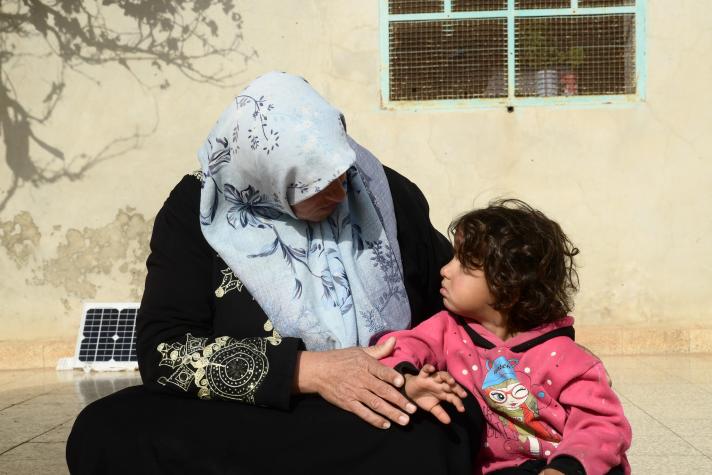
The European Consensus on Humanitarian Aid stresses the need to integrate gender considerations. This includes protection strategies against sexual and gender-based violence (GBV) in humanitarian response.
The Consensus considers that crisis-affected women, girls, boys, and men should participate in the design, implementation and evaluation of humanitarian actions.
To ensure the effective implementation of this policy, the European Commission introduced a Gender-Age Marker in 2014. This tool measures how EU-funded humanitarian actions integrate gender and age considerations.
In 2023, the third assessment report highlighted that between 2018-2021, there has been an overall improvement in the integration of gender and age considerations into humanitarian assistance.
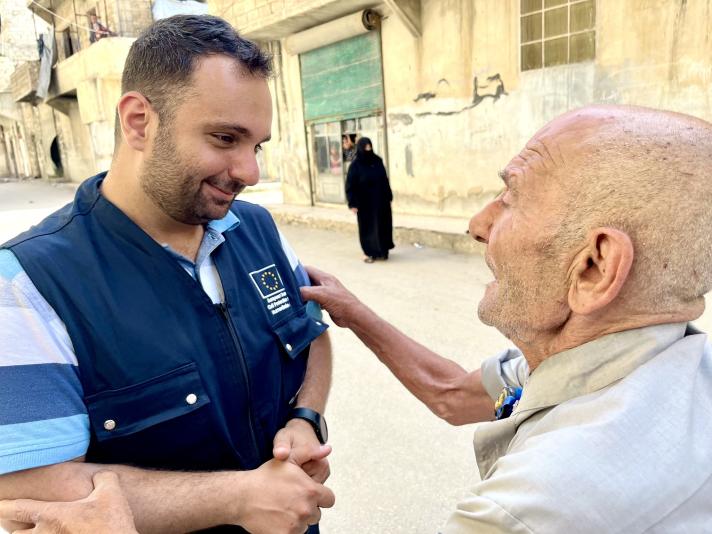
In 2016, the European Commission issued a policy with further guidance for protection activities, including gender-based violence.
In November 2020, the EU adopted its third Gender Action Plan for 2021-2025. It sets out the framework for action for all activities on gender equality and women's empowerment in the EU's external relations, as well as for Member States.
The Gender Action Plan includes several humanitarian priorities, including gender-based violence, sexual and reproductive health, and the Gender-Age Marker.
Protection from gender-based violence in emergencies
In 2013, the ‘Call to Action on Protection from Gender-Based Violence in Emergencies’ was established. This is a global initiative to implement structural changes in the humanitarian system to address GBV.
The initiative brings together more than 100 partners, including the EU and 16 of its Member States, as well as other countries, NGOs and international organisations. The EU has been an active member of the Call to Action and led this initiative in 2017-2018.
The EU’s annual progress reports can be found on the official website.
In January 2021, the EU renewed its commitments to the Call to Action roadmap 2021-2025. Among other things, the EU commits to:
- implement and disseminate its relevant humanitarian policies for GBV in emergencies
- support capacity-building of its staff and partners to enhance systemic integration of gender considerations into humanitarian assistance
- continue to advocate for:
- addressing GBV in emergencies from the onset of crises
- the importance of GBV risk mitigation and gender-sensitive humanitarian aid
- promoting the work of the Call to Action on Protection from Gender-Based Violence in Emergencies, including through its engagement with the EU Member States
- respond to GBV in emergencies against women, girls, men and boys
- report annually on funding allocations for humanitarian-targeted actions that respond to GBV in line with the European Consensus on Humanitarian Aid (2008)
- incorporate protection strategies against GBV in all aspects of humanitarian assistance
- promote the active participation of women in humanitarian aid
- implement a Nexus approach in preventing and responding to gender-based violence, wherever feasible.
Last updated: 26/06/2023
Facts & figures
EU humanitarian funding on gender and age for 2021:
- €33 million to prevent and address gender-based violence
- €29 million for reproductive health
Related information
- How does the EU ensure diversity and inclusion in humanitarian aid?
- Call to Action on Protection from Gender-Based Violence in Emergencies
- Gender in Humanitarian Assistance: Different Needs, Adapted Assistance (2013) - official version
- Leaflet: Gender Policy
- Gender-Age Marker Toolkit
- Leaflet: Gender-Age Marker
- Gender-Age Marker report 2018-2021
- Report Field Workshops EU leadership of Call to Action 2017-2018
- Education in emergencies
- Gender Action Plan III -- a priority for EU external action