

Introduction
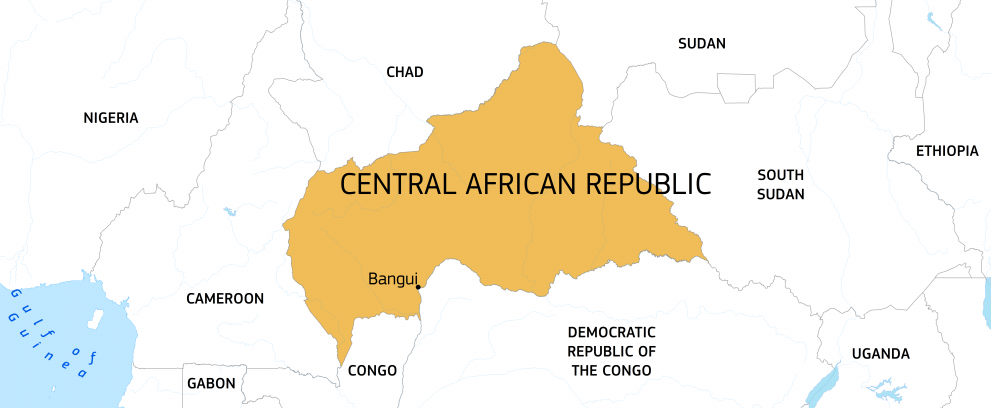
The Central African Republic (CAR) is one of the poorest countries in the world and is at the bottom of the Human Development Index, 191st out of 193 countries. Years of conflict, political instability and underdevelopment have resulted in one of the world’s most neglected, protracted humanitarian crises.
Essential social services are lacking and 2.8 million people – almost half the population – need humanitarian aid. The situation is exacerbated by violence and natural disasters such as floods. The EU is a long-standing donor of humanitarian operations in CAR.
What are the needs?
According to the risk assessment tool INFORM, CAR ranks 5th among countries most at risk of humanitarian crises with poor socioeconomic indicators, limited access to social services, and a food crisis. Continued violence and natural disasters such as floods and wildfires are also of great concern.
Civilians are bearing the brunt of continued violence. One in five Central Africans is displaced: 740,000 are living as refugees in neighbouring countries and over 455,000 remain internally displaced. CAR also hosts 60,000 refugees from Sudan and Chad.
The protection of vulnerable displaced people, including women, girls and children at risk of sexual violence or forced recruitment, continues to be an urgent need. Living conditions for the displaced, many of whom were forced to relocate multiple times, are also very difficult. Main challenges are accessing healthcare, food, clean water, shelter, and education.
People in CAR are facing food shortages due to high food prices and increased importation costs. According to the Integrated Food Security Phase Classification (IPC), 3 million people are expected to reach crisis or emergency levels of food insecurity during the lean season from April to August 2024.
CAR remains one of the most dangerous countries for humanitarian workers, with 169 security incidents in 2023 that directly affected them.
How are we helping?
The EU’s humanitarian response focuses on covering the needs of the most affected populations such as food assistance and livelihood support, agricultural support, education, healthcare, shelter, water, sanitation, and hygiene.
The crisis in CAR is above all a protection crisis. Consequently, all EU-funded humanitarian aid must contribute to the protection of the affected populations. Safeguards are put in place to prevent sexual and gender-based violence, while supporting and caring for survivors of such violence and creating a protective and educational environment for children are prioritised.
Emergency relief is provided to internally displaced people, refugees and host communities who mostly rely on humanitarian assistance for their survival. Host communities are included since the prolonged stay of forcibly displaced people puts pressure on many local communities and their already limited resources.
EU humanitarian aid is often delivered in unstable and hard-to-reach areas and areas affected by floods. We support the humanitarian coordination, security and logistics of the aid operations. As reaching people in need is both difficult and dangerous due to widespread violence and poor infrastructure, the EU funds the UN Humanitarian Air Service (UNHAS) which enables aid workers and assistance to reach places that are insecure and difficult to access.
So far in 2024, the EU has allocated €19.2 million for humanitarian aid in the country.
The EU also provides humanitarian assistance to both host communities and Central African refugees in Cameroon, Chad, and the DRC.
Last updated: 30/09/2024
Facts & figures
2.8 million people in the CAR require humanitarian aid (OCHA, Global Humanitarian Overview 2024)
Over 455,000 internally displaced persons (Commission for the Monitoring of Population Movements, Sept. 2024)
740,000 Central Africans have taken refuge in neighbouring countries (UNHCR, June. 2024), and
over 3 million people will face acute food insecurity from April to August 2024
- IPC Phase 3 (Crisis): 2.5 million people
- IPC Phase 4 (Emergency): 508,000 people
EU humanitarian funding:
€19.2 million in 2024
More than €284.7 million since 2014