

Introduction
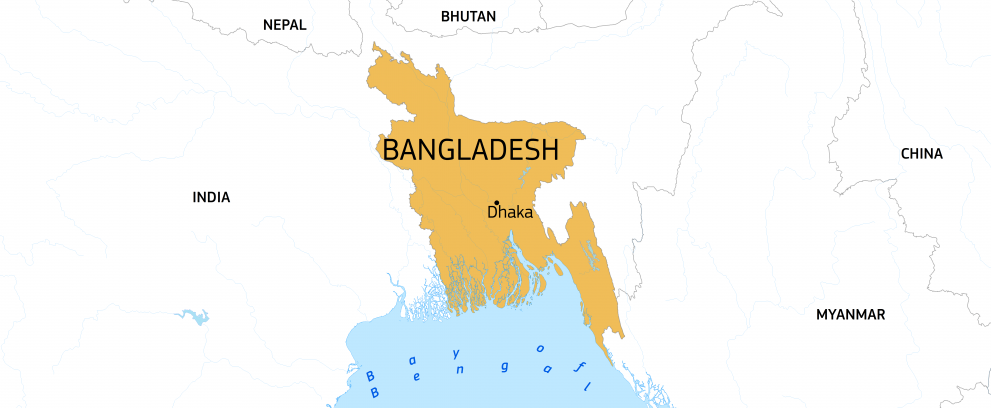
Bangladesh is currently home to over 1 million Rohingya refugees who have fled targeted violence, large-scale armed attacks, and human rights violations in neighbouring Myanmar.
Most of them stay in the congested refugee camps of Cox’s Bazar, where conditions are extremely dire, with serious security and protection concerns. There is currently no realistic prospect for voluntary, safe, dignified and sustainable return as high intensity conflict continues to rage in Myanmar, including in Rakhine State. Due to their precarious circumstances, Rohingya people continue to embark on dangerous sea journeys to neighbouring countries like Indonesia and Malaysia in search of a better life.
Bangladesh is also one of the most disaster-prone countries in the world, exposed to a variety of natural hazard-induced disasters including cyclones, floods, and earthquakes.
What are the needs?
Over the past 40 years, the Rohingya – an ethnic, religious, and linguistic minority – have fled persecution and discrimination in Myanmar, mostly seeking refuge in neighbouring Bangladesh.
Following violent military crackdowns in the northern parts of Myanmar’s Rakhine State in August 2017, more than 770,000 Rohingya have fled across the border in search of protection and assistance in Cox’s Bazar. This is one of the poorest districts in Bangladesh and prone to natural hazards.

Efforts have been made to ensure better living conditions for the Rohingya refugees, but their situation remains precarious. It has continued deteriorating this year due to the protracted nature of the crisis, lack of more sustainable and durable solutions, increased tension in neighbouring Myanmar, and decreasing humanitarian funding.
Being the world’s largest stateless population, most Rohingya do not have formal refugee status, and have limited access to livelihoods and economic opportunities. They remain vulnerable to exploitation and serious protection risks. Living in refugee camps with no self-reliance opportunities, they depend entirely on humanitarian aid.
The intensifying conflict between the Myanmar Armed Forces (MAF) and the Arakan Army in Myanmar’s Rakhine State has significantly worsened the security and protection conditions in the Rohingya refugee camps of Cox’s Bazar since early 2024. The camps have seen a rise in physical threats, killings, forced recruitment, and child abductions by armed groups. Reports also indicate a decline in school attendance due to fears of forced recruitment.
The situation in the camps thus requires urgent funding to sustain essential assistance and prevent further deterioration of living conditions for the refugees.
Due to its geographical location, Bangladesh is also prone to seasonal flooding, landslides, and cyclones. This makes Bangladesh one of the most vulnerable countries in the world to the effects of climate change.
Over the past decades, Bangladesh has developed emergency preparedness and response mechanisms, which continue to save lives before and during major disasters. However, climate change and environmental degradation are likely to worsen the frequency and intensity of these natural hazard-induced disasters – all contributing to increasing humanitarian needs.
How are we helping?
In 2025, the EU has approved an initial allocation of €32.3 million in humanitarian aid for Bangladesh. In 2024, the EU released over 54 million in humanitarian aid, including disaster preparedness and emergency funding.
Most of the EU’s humanitarian funding aims to support the Rohingya refugees in Bangladesh, as well as their host communities through:
- food assistance,
- nutrition assistance,
- access to water, sanitation, and healthcare services,
- education,
- shelter,
- camp management,
- site management and site development,
- disaster preparedness,
- increased protection for the most vulnerable groups.
Over 35,000 Rohingya refugees are also hosted on the Bangladeshi island of Bhasan Char, with limited access to essential services. The EU has been supporting refugees in Bhasan Char since 2022.

EU humanitarian funding is also supporting efforts to reduce the impact of floods, cyclones and landslides in highly affected parts of Bangladesh, by promoting and enhancing anticipatory action. In 2024-2025, a total of €7 million will support disaster preparedness, and disaster risk reduction and resilience in Bangladesh.
There will be a particular focus on early warning systems and effective anticipatory action models, shock responsive social protection, and involvement of the private sector.
In response to recent extreme weather events, in 2024, the EU mobilised over €5 million in emergency aid, including in response to tropical cyclone Remal in May, and to devastating floods during the monsoon season, among others.
Last updated: 03/03/2025
Facts & figures
Almost 1 million Rohingya refugees from Myanmar
EU humanitarian funding:
€32.3 million in 2025
Over €54 million in 2024
Disaster preparedness: €7 million in 2024-2025
Over €38.5 million in 2023
€46.8 million in 2022