Introduction
Venezuela continues to face a deep economic, social and political crisis that severely affects the healthcare system, causing large shortages in public services and increasing difficulties in access to food.
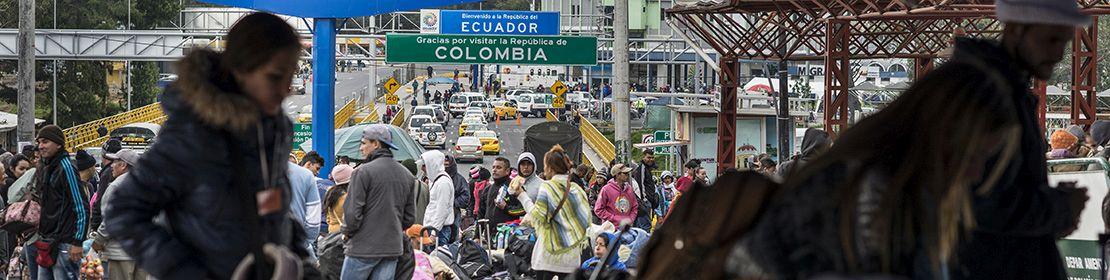
More than 7.1 million Venezuelans have left the country since 2015. According to local humanitarian estimations, 19.7 million people need humanitarian assistance. The World Food Programme considers Venezuela one of the most severely food insecure countries in the world, with 9.3 million people food insecure in 2019.
COVID-19 has further deteriorated the health, nutritional, educational and social situation, depleting the already scarce resources of the population, and leading to an increase in negative coping mechanisms.
What are the needs?
Despite the potential end of the hyperinflation cycle, severe scarcity of food and essential goods still compromises the daily lives of many. According to recent UN figures, the country would need more than 30 years of positive economic growth, similar to 2021, to reach the volume it had in 2013.
As of June 2022, the minimum monthly wage is equivalent to €26, and the average monthly salary is around €85, while the basic monthly food basket amounts to around €430. As of January 2021, 37.3% of the pregnant women supported by UNICEF were suffering from undernourishment.
Up to 70% of school-aged children are not attending class regularly and more than 15% have had significant delays in their education, even before the pandemic. The mass exodus has also resulted in the lack of qualified education personnel – at least 200,000 teachers left the country since 2017.
Around 90.2% of the population do not have regular access to water. The country has seen several widespread outbreaks of infectious diseases: measles, diphtheria, and malaria, most likely because preventative programmes have been discontinued, and sanitary conditions have worsened.
Homicide rates are among the highest in the world (40.4 deaths per 100,000 inhabitants in 2022). The situation in border areas, confronted by the presence of armed actors and criminal gangs, is of particular concern with an increase of violence.

How are we helping?
In 2023, the EU is allocating €75 million in humanitarian aid to respond to the most urgent needs of Venezuelans.
The funding will help people in need in Venezuela and communities in the neighbouring countries hosting migrants and refugees. The funding will focus on food assistance, health, shelter, protection, education and legal assistance among other areas of intervention.
Since 2016, the EU has allocated €390 million in emergency humanitarian aid for Venezuela. The funding helps assisting Venezuelans in need inside the country as well as those hosted in neighbouring countries.
EU humanitarian assistance is delivered through UN agencies, international non-governmental organisations (NGOs), and the Red Cross movement who implements projects covering the broad spectrum of humanitarian needs.
The aid focuses on addressing the most pressing needs of the population, targeting vulnerable groups such as children under 5 years (mainly nutrition) and children under 18 (comprehensive), pregnant women and breastfeeding mothers, older people, and indigenous groups.
Projects focus on delivering (i) vital health care, (ii) water, sanitation and hygiene, (iii) education in emergencies, (iv) , and (v) nutritional and food support.
As part of the EU global response to COVID-19, in August 2020 a Humanitarian Air Bridge Operation consisting of 2 flights reached Caracas.
The planes brought 82.5 tonnes of life-saving goods to supply humanitarian partners in the field and support half a million Venezuelans in need. The cargo consisted mostly of medical equipment such as personal protection gear, medicines, water purification equipment, and family hygiene kits.
The assistance to refugees and internally displaced people focuses on emergency medical services, food assistance, the provision of legal information and support, protection initiatives (specifically against gender-based violence and human trafficking), education in emergencies, and shelter.
Last updated: 17/03/2023
Related links