
Introduction
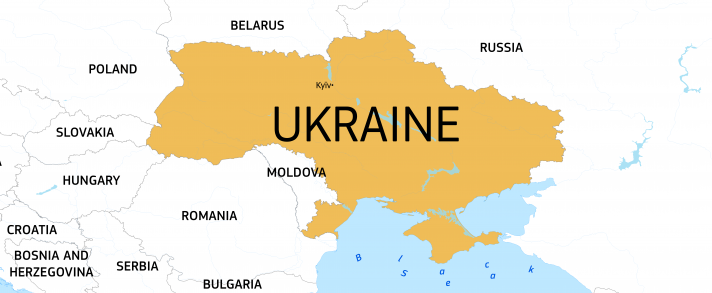
Russia’s war on Ukraine continued to escalate in 2024 and shows no signs of abating in early 2025.
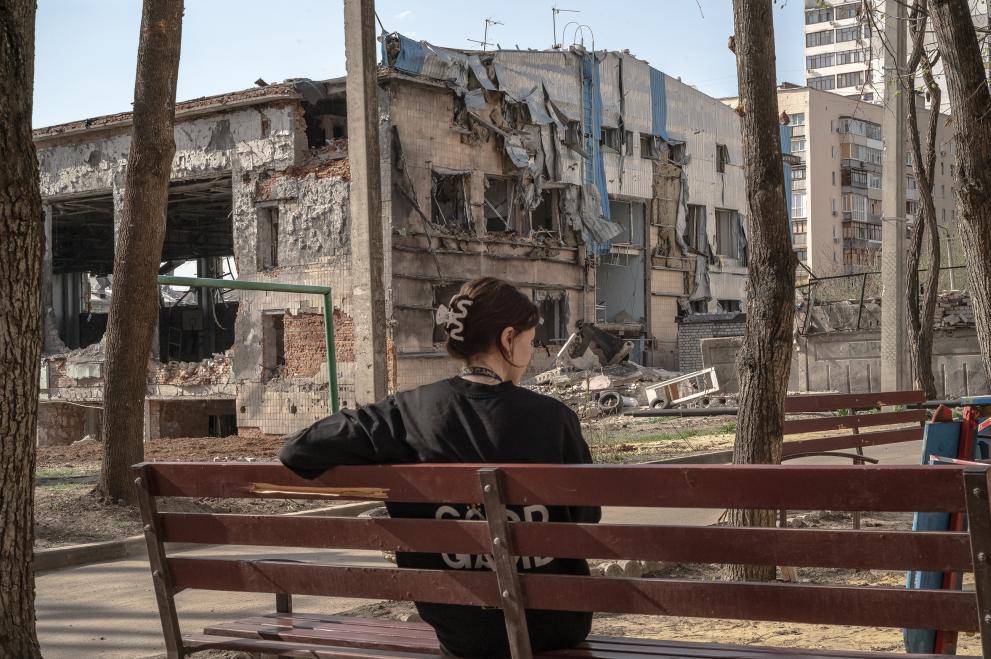
Heavy fighting and attacks continue to endanger the lives of civilians and cause severe damage to housing, water and electricity supply, heating, and public infrastructure such as schools and health facilities. Millions of people have limited or no access to basic services.
The EU has mobilised all available resources to enable emergency assistance to Ukraine.
In February 2022, Russia’s full-scale invasion of Ukraine triggered the fastest-growing displacement crisis in the world. Millions of people were forced to leave Ukraine, while millions more were displaced within the country.
The majority of those fleeing Ukraine were women and children.
Currently, about 3.5 million people are believed to be internally displaced. Meanwhile, many others are still stranded in affected areas, either unwilling or unable to leave due to military action.
An estimated 12.7 million people need humanitarian assistance in 2025.
Needs inside the country
The situation is most severe in eastern and northeastern Ukraine, especially along the frontlines, in southern Ukraine, and in the Russian-occupied territories.
Russia’s war on Ukraine has led to serious humanitarian challenges. Ensuring safe access for humanitarian organisations is essential to deliver relief items and enable safe evacuations from areas under attack.
Millions of people lack access to essential services, including water, electricity, and heating, causing severe hardship in this harshest ever winter season.
The war has raised significant protection concerns as civilians are exposed to shelling, armed violence, mines, family separation, looting or eviction, and loss of safe housing and shelter.
The safety risks for women and girls are extremely worrying, as well as the situation of the most vulnerable groups (children, elderly people, persons with disabilities, and LGBTIQ+ people). It is estimated that at least 2.5 million people, primarily women and girls, require prevention and response services to gender-based violence.
Continuous attacks also give rise to mental health care needs. Nearly 10 million people are at risk of or are living with mental health conditions, including stress, anxiety, depression, and post-traumatic stress disorder. The situation for children is especially worrying due to their exposure to conflict and violence, restricted access to safe education and limited opportunities for social interaction.
The repeated violations of international humanitarian law and war crimes are extremely alarming.
How are we helping?
The EU’s largest civil protection operation to date
To provide emergency assistance to Ukrainians, the European Commission is coordinating its largest ever operation under the EU Civil Protection Mechanism.
So far, all 27 EU countries together with 6 participating states (Norway, Türkiye, North Macedonia, Iceland, Serbia and Moldova), have offered in-kind assistance ranging from medical supplies and shelter items to vehicles and energy equipment.
The EU has established logistical hubs in Poland, Romania, and Slovakia to channel items to Ukraine more efficiently. By early January 2025, more than 153,000 tonnes of aid has been delivered.
Given the immense need for emergency equipment in Ukraine, the EU has deployed assistance from its rescEU stockpiles, including:
- power generators
- medical equipment
- temporary shelter units
- water treatment stations in response to Nova Kakhovka dam breach
- specialised equipment for public health risks such as chemical, biological, radiological, and nuclear threats.

The EU is also coordinating medical evacuations of Ukrainian patients in urgent need of treatment, transferring them to hospitals across Europe to receive specialized care. In September 2022, the EU opened a hub in Rzeszów, Poland, to facilitate these medical evacuations.
The EU Medevac Hub offers treatment to patients arriving from Ukraine before they are flown out to a hospital in another European country. So far, 4,000 patients have been transferred to 22 countries for treatment.
In April 2023, Ukraine joined the EU Civil Protection Mechanism as a participating state. Established in 2001, the Mechanism aims to strengthen the cooperation between the EU Member States and 10 participating states on civil protection to improve prevention, preparedness, and response to disasters.
EU humanitarian aid in Ukraine
The EU has been delivering humanitarian assistance to Ukraine since February 2014.
Since Russia’s full-scale invasion in February 2022, the European Commission has allocated over €1 billion for humanitarian aid programmes in Ukraine. This includes:
- €485 million in 2022
- €300 million in 2023
- €165 million in 2024
- €140 million in 2025
EU humanitarian funding is helping people inside Ukraine by providing them with (i) cash assistance to help cover basic needs, (ii) protection, (iii) health care, including mental health and psychosocial support, (iv) emergency and winterised shelter, (v) food, (vi) water, (vii) essential household items, and (viii) education in emergencies. The EU pays particular attention to support the most vulnerable households in preparation for the upcoming winter.
Our partners are present across the country and mobilising assistance on the ground.
EU humanitarian offices in Ukraine play a key role in facilitating humanitarian coordination and information sharing among various organisations, including donors, authorities and humanitarian partners.
EU humanitarian experts are also carrying out regular field missions in almost all affected regions of Ukraine to assess the needs and monitor EU-funded actions.
More than 1,000 days ago, on 24 February 2022, Russia waged an all-out war on Ukraine. These days will forever be marked by the immeasurable suffering of the Ukrainian people but also by their outstanding resilience.
The EU Humanitarian Aid has been operating in the country since 2014, long before the war in Ukraine started making headlines all across the world. In 2022, we rapidly expanded our life-saving assistance to cover the entire country. To this day, the EU support has not wavered, but at the same time, we cannot avoid the harsh reality that international attention to Ukraine's struggle is gradually waning.

Timeline
- 13 January 2025EU announces €148 million humanitarian aid package during Commissioner visit to Ukraine
While Russia’s war of aggression continues to devastate Ukraine, the Commission is announcing €148 million in new humanitarian aid to support those affected by the war in Ukraine and neighbouring Moldova, out of which €140 million for Ukraine and €8 million for Moldova.
- 19 September 2024EU allocates a further €55 million in humanitarian aid to Ukraine and €5 million to Moldova
- 6 September 2024EU provides €40 million in humanitarian aid for winter preparedness in Ukraine
The Commission is boosting its humanitarian funding to vulnerable Ukrainians with an additional €40 million ahead of the approaching winter. Out of this, €35 million is allocated for humanitarian projects in Ukraine and €5 million for supporting Ukrainian refugees and their host communities in Moldova.
- 20 February 2024EU provides an additional €83 million in humanitarian aid to support people affected by Russia’s war on Ukraine
€75 million is allocated for humanitarian projects in Ukraine to provide emergency aid such as access to basic needs, shelter, clean water, healthcare and education.
€8 million is allocated for humanitarian support of Ukrainian refugees and hosted communities in Moldova.
- 14 November 2023EU boosts humanitarian funding to Ukraine with €100 million for Ukraine and €10 million for Moldova
This new funding will help the EU’s humanitarian partners to provide essential services like cash assistance, food, water, shelter, health care, psychosocial support, and protection.
- 6 June 2023Nova Kakhovka dam breach
In response to the disastrous breach of the Nova Kakhovka dam, the EU mobilised immediate assistance to Ukraine via (i) its Civil Protection Mechanism, (ii) deployment of its rescEU reserves, and (iii) via its humanitarian partners.
- 20 April 2023Ukraine joins the EU Civil Protection Mechanism
On 21 April, Ukraine became a participating state of the EU Civil Protection Mechanism – the European solidarity framework that helps countries overwhelmed by a disaster.
- 20 April 2023The EU tops up its humanitarian aid to Ukraine with €55 million
This new humanitarian funding will notably focus on preparing for next winter to ensure an extra layer of protection to those in need.
- 3 February 2023New humanitarian funding €145 million for Ukraine
During the EU-Ukraine summit in Kyiv, the EU mobilised further €145 million in humanitarian aid to Ukraine.
- 19 October 2022EU announces new rescEU reseve to provide emergency shelter to displaced Ukrainians
The EU has developed a new rescEU shelter reserve. It will be put into immediate use in Rivne, Bucha and Kharkiv regions to provide temporary shelter to internally displaced persons.
- 19 October 2022The EU announces additional €150 million in humanitarian aid for Ukraine and €25 million for Moldova
The key priority is to provide winterised shelter in view of the expected freezing temperatures. Other priorities include education in emergencies, health, and protection assistance.
This brings the total humanitarian funding for Ukraine to €485 and Moldova to €38 million.
- 1 September 2022New EU Medevac hub in Rzeszów, Poland
The EU Medevac hub, financed through the EU Civil Protection Mechanism, offers 24/7 nursing care, screening for diseases, vaccination and mental health support before patients are transferred to another European country. The medical evacuation scheme includes 2 medevac flights a week offered by Norway.
- 30 August 2022EU donates 5 million potassium iodide tablets to protect Ukrainians from potential radiation exposure
The EU will provide 5.5 million potassium iodide tablets via the EU Civil Protection Mechanism for Ukraine, including 5 million from the rescEU emergency reserves and 500,000 from Austria.
This will bring the total of tablets delivered to Ukraine to 8.5 million, including the 3 million procured by the rescEU reserve with the help of France and Spain in April.
- 9 June 2022The EU announces additional €205 million in humanitarian aid
During a visit to Ukraine, Commissioner Lenarčič announces new humanitarian funding bringing the total EU humanitarian aid in response to the war in Ukraine to €348 million.
- 19 April 2022Additional €50 million in humanitarian aid
The EU allocates a further €50 million to support the people affected by Russia’s war on Ukraine, with €45 million for humanitarian projects in Ukraine and €5 million for Moldova.
- 12 April 2022European Humanitarian Response Capacity
A humanitarian operation in Moldova sets up a warehouse in Chisinau for humanitarian partners and the delivery of over EU-owned 1,200 tents and 4,000 blankets for people displaced by the conflict. Another humanitarian warehouse is being set up in Vinnytsia, Ukraine.
- 29 March 2022New channel for private donations to Ukraine created by the European Commission
In kind donations will supply vital items such as medicines, vaccines, medical equipment, tents, beds and emergency blankets through this extension of the EU Civil Protection Mechanism.
- 13 March 2022EU's first medical evacuation operation in Ukraine crisis
The EU coordinated its first medical evacuation in the Ukraine crisis, helping to transfer 3 chronically ill Ukrainian children with their relatives from Poland to Italy.
- 11 March 2022Czechia activates the EU Civil Protection Mechanism
Czechia requests assistance due to large influx of refugees, in the form of emergency temporary shelters, accommodations items, and camp manager experts.
- 4 March 2022Establishing EU logistics hubs and mobilising rescEU reserves
The EU mobilises further assistance via the rescEU medical stockpiles based in Germany, Hungary and the Netherlands.
Logistical hubs have been established in Poland, with others being set up in Romania and Slovakia, to distribute required aid to Ukraine as quickly as possible.
Team of EU experts in Poland
EU Civil Protection Team is operational on the ground in Poland, helping to coordinate the incoming aid as efficiently as possible.
- 2 March 2022More emergency assistance and Commissioner visits Poland
Commissioner for Crisis Management, Janez Lenarčič, and Commissioner for Home Affairs, Ylva Johansson, visit Poland to assess the situation on the ground and coordination needs for providing protection to people fleeing the war in Ukraine.
- 28 February 2022€90 million in EU humanitarian funding for Ukraine
European Commission announces its first humanitarian aid funding of €90 million in response to the full-scale war to help civilians affected.
- 25 – 28 February 2022Slovakia, Moldova and Poland request assistance via the EU Civil Protection Mechanism
Slovakia, Moldova and Poland request to better cope with the refugee inflows from Ukraine.
- 15 February 2022Ukraine requests assistance due to the threat of further escalation
Following a request from the Government of Ukraine for emergency assistance before the invasion, the EU started delivering essential supplies via the EU Civil Protection Mechanism to support the civilian population.