Filter by
News (459)
RSS
As the Nutrition for Growth Summit draws to a close in Paris today, Team Europe is reinforcing its leadership and commitment to fighting the global malnutrition crisis. Taken together, the Team Europe commitments amount to at least €6.5 billion between 2024 and 2029.

Today, at the Nutrition for Growth (N4G) Summit in Paris, the European Commission announced a new pledge of €3.4 billion until 2027 to combat malnutrition globally.
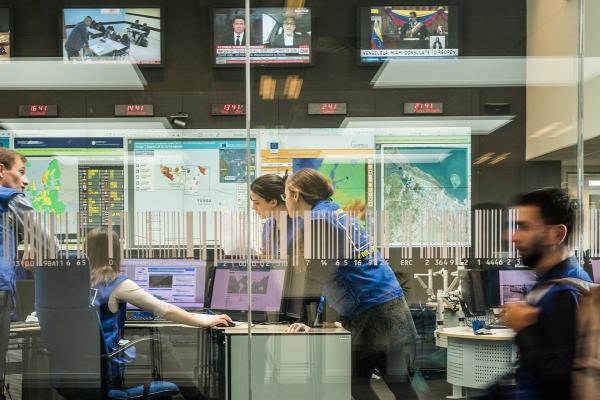
The Strategy includes 30 key actions and a detailed Action Plan to advance the Preparedness Union's objectives, as well as developing a ‘preparedness by design culture' across all EU policies.

With this funding, our humanitarian partner the World Health Organisation (WHO) will be able to address critical needs related to coordination, surveillance, infection prevention and control case management, operational support, and logistics.

The EU hosted the third humanitarian Senior Officials Meeting on Sudan on 13 March 2025. The meeting, held in Brussels, gathered humanitarian donors, United Nations (UN) agencies, the International Committee of the Red Cross, international non-governmental organisations and Sudanese local responders

In the early hours of Sunday, 16 March, a fire broke out in a nightclub in Kocani, North Macedonia, killing 59 people and injuring more than 155. North Macedonia activated the EU Civil Protection Mechanism requesting assistance to evacuate 15 patients suffering from severe burns.

Amid renewed hope and significant challenges after the fall of the Assad regime, the EU alongside EU Member States, regional and international partners, as well as, Syria's transitional authorities, reaffirmed its support for an inclusive, peaceful, Syrian-owned and Syrian-led transition.

The European Union will convene its 9th international Conference in support of Syria on 17 March, in Brussels. This year's edition comes at a historic moment, following the fall of the Assad regime where the Syrian people have the chance to re-take control of their destiny and rebuild their country.

Mauritania is experiencing first-hand the consequences of the aggravation of the situation in Central Sahel. The new funding will support the urgent needs of Malian refugees, Mauritanian returnees and the most vulnerable host populations.

The Commission has allocated today €76 million in EU humanitarian to address the needs of people affected by the main crises in South and Southeast Asia.