Why is this essential?
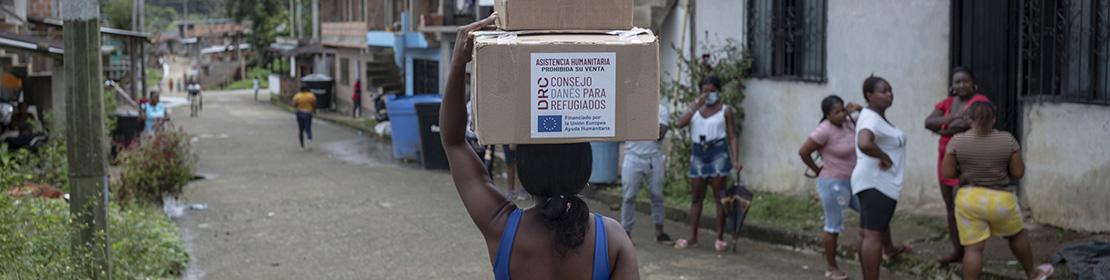
There are millions of people worldwide suffering in the shadows.
Many of them rely on international aid for their very survival. However, they have been forgotten by international media and donors, leading to a lack of funding and efforts to resolve their situation.
The EU is committed to helping the most vulnerable people affected by these “forgotten crises”.
How are we helping?
The EU as a global, principled donor, allocates at least 15% of its initial annual humanitarian budget to forgotten crises.
The EU’s Civil Protection and Humanitarian Aid Operations department defines a “forgotten crisis” as a severe, protracted humanitarian crisis where people receive insufficient or no international aid.
There is often also no, or not enough, political commitment to solve the situation due in part to a lack of media interest.
The term “forgotten crises” refers to protracted conflict situations. It can also refer to crises resulting from the cumulative effect of recurring natural hazards or a combination of the two.
According to the INFORM Severity Index, there are various types of forgotten crises such as conflict, drought, epidemics or floods.
Some crises are considered “complex crises” when natural and/or human-induced causes interact and overlap, making it often impossible to isolate the impact of each cause.
The “forgotten crises” often concern minorities within a country. The living conditions of these groups of people tend to be below the country average.
Forgotten Crises Assessment
The Forgotten Crises Assessment is based on evidence, including a combination of the following factors:
- Risk represented by the INFORM Risk Index
- Crisis severity represented by INFORM Severity Index
- Media coverage assessed via the Europe Media Monitor
- The level of humanitarian aid per capita assessed via the Financial Tracking Service (UN OCHA)
- Qualitative assessment by the Commission’s experts located in the field and headquarters.
The EU balances this type of “top-down” approach, based on global indices and other quantitative information, with the “bottom-up” approach of analysis by experts on the ground.
They can identify pockets of humanitarian crisis and back up their proposals for action with a needs assessment that is as recent and comprehensive as possible.
For 2024, the Assessment identified the following crises, including a range of country-specific and regional crises:
Africa
- Complex crisis in the Democratic Republic of the Congo (DRC)
- Displacement crisis in Uganda
- Conflict in Burkina Faso
- Crisis in Northwest and Southwest provinces of Cameroon
- Banditry and intercommunity violence in Northwest Nigeria
- Complex crisis in South Sudan
- Complex crisis in Mali
- Sahrawi crisis in Algeria
Asia
- Rohingya refugee crisis in Bangladesh
- Complex crisis in Myanmar (including displacement crisis in the region)
- Conflict in Philippines – Mindanao
- Multiple crises in Iraq
- Socio-economic crisis in Lebanon
Latin America and the Caribbean
- Complex crisis in Haiti
- Multiple crises in Central America
Last updated: 05/01/2024